·
Written by
Polarsteps Editors

Tracked and planned trips in the Polarsteps app, along with an extensive traveler survey, reveal where we went, how we planned, and what’s on the horizon for 2026.
It was a record year for Polarsteps travelers, who covered almost 24 billion kilometers. Yes, 24 billion kilometers. To put it into perspective, that's about eight return trips from Earth to the Sun!
Individually, each of these remarkable adventures tells a personal story. Yet as a whole, they reveal trends shaping the travel world. For instance, the average trip duration in 2025 fell by 15%, yet the average distance traveled decreased by only 3.4%, which made us wonder: are we trying to squeeze more into our days?
To help us understand similar questions and the motivations behind these travels, we dive into some key findings from our recent global user survey. And to look ahead to 2026, we examine a wealth of planning data to show you where people are heading next.
But first, let’s look at the destination trends that our millions of travelers have been setting over the past 12 months.
Global travel trends of 2025: rise of the Baltic States and Central Asia
All percentages quoted in this section reflect year-on-year changes in traveler numbers, adjusted to account for Polarsteps’ rapid growth.
Ilya Orehov/Unsplash
Western Europe dominates, but the Baltics are on the rise
Once again, Germany, France, Spain, Italy, and the United Kingdom were the five most visited nations by Polarsteps travelers. Ten other European countries also cracked our global top 20: Austria, Belgium, Portugal, Switzerland, Greece, the Netherlands, Denmark, Norway, Sweden, and Croatia.
“With more than 10 million Polarsteps travelers based in the Netherlands, France, and Germany, it’s not surprising that Europe remained the strongest-performing continent overall in 2025,” says Matt Phillips, Head of Editorial at Polarsteps. "However, to find the fastest rising travel destinations in Europe, we need to look to the Baltic States and the Balkans."
Notable travel trends within Europe
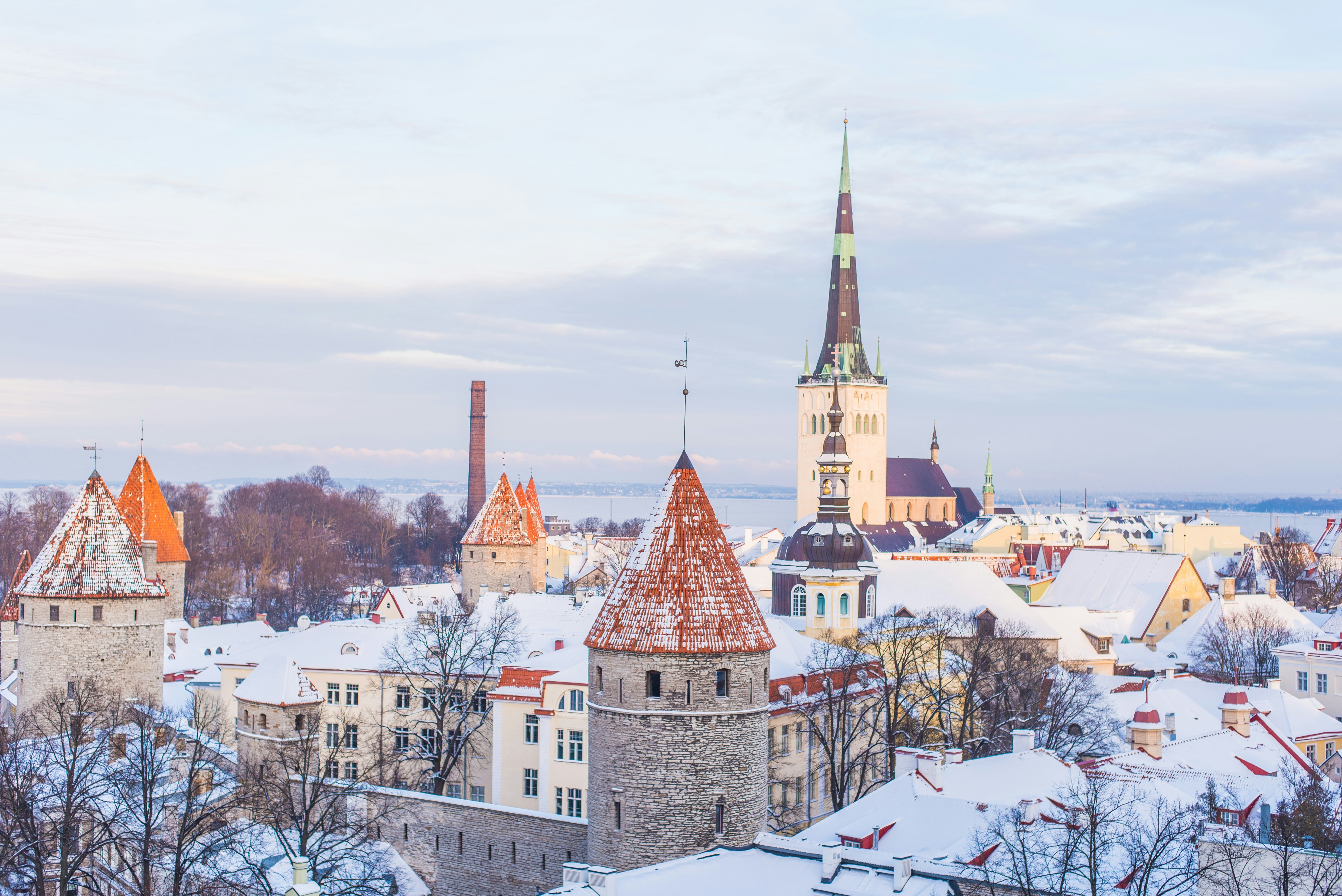
Lithuania (+20%), Latvia (+13%), and Estonia (+12%) were the three fastest-rising nations on the European travel scene. “We're seeing the rising appeal of ‘coolcation’ spots during hotter European summers as one of the reasons behind the Baltic States' momentum," says Matt Phillips. "Other factors include their relative affordability, increased flight connections, and a quieter atmosphere than Europe’s major hotspots.”
Bosnia and Herzegovina (+10%) and Montenegro (+7%) were the next-ranked European countries in terms of relative growth. Their performance has likely been aided by improved outdoor and adventure experiences, as well as better transport links, fewer crowds than in neighboring Croatia, and relative affordability.

Riley/Unsplash
USA loses momentum
After a standout year in 2024, when the United States of America was one of our fastest-rising major destinations and climbed sharply across key European markets, 2025 told a very different story. Despite a weakening dollar making it cheaper to visit, the number of Polarsteps travelers entering the USA fell by 16%, placing the country among the worst performers globally this year. New geopolitical realities, such as stricter border controls, have coincided with this downward trend.

Mick Truyts/Unsplash
Japan and 'the Stans’ illustrate Asia’s expanding appeal
Travel in Asia saw significant shifts in 2025, led by Japan’s surge into the global top 20 and the strong rise in popularity of two other East Asian nations: China and South Korea. Sri Lanka and the Stans of Central Asia have also made significant inroads.
Notable travel trends within Asia
Japan (+30%), China (+24%), and South Korea (+10%) are gaining ground on the historical hotspots of Southeast Asia: Thailand (+4%), Indonesia (-10%), and Vietnam (+4%). Besides viral cultural phenomena like K-dramas and anime increasing the appeal of East-Asian countries, other factors contributing to their popularity could include their cooler climates and strong safety records.
The greatest concentration of relative travel growth on the planet was found in Central Asia, where Kyrgyzstan (+53%), Uzbekistan (+39%), Tajikistan (+37%), and Kazakhstan (+31%) all had robust years. Matt Phillips says, “With their Silk Road histories, rich cultures, community-based tourism initiatives, and wild landscapes, the Stans are proving a newfound haven for adventure-seeking travelers.”
Sri Lanka (+22%) continues its rise from the lows of 2020, aided by its visa-free entry scheme and renewed investment in the tourism sector.
By a wide margin, Oman (+16%) experienced the most growth in traveler numbers in the Middle East during 2025. With its solid reputation for safety and its concentration on improving tourism development, the country might be benefiting from the falling interest in Jordan (-33%).

Albert Dehon/Unsplash
Culture, heritage, and island nations shape growth in Africa
Ethiopia, Morocco, Tunisia, Egypt, and Senegal — all African leaders in terms of UNESCO World Heritage Sites — were the fastest-growing travel destinations on the continent in 2025. South Africa maintained its position as the second-most-visited country (behind Morocco), but saw a slight decline in Polarsteps traveler numbers. Also of note was the growth in traveler arrivals seen in Africa's Indian Ocean islands.
Notable travel trends within Africa
Ethiopia (+28%) saw the largest jump among African nations in 2025 in terms of Polarsteps travelers. This is perhaps not surprising, given that the country had hoped to double tourism arrivals to two million in 2025, and its government had invested heavily in tourism marketing.
North Africa was on the rise in 2025, with Morocco (+22%), Egypt (+14%), and Tunisia (+12%) all showing substantial growth. Increased air links to Europe, improved infrastructure, and strategic marketing likely contributed to their increasing popularity among travelers.
Key safari and wildlife destinations, such as South Africa (-4%), Kenya (-5%), Botswana (0%), and Zambia (-8%) received fewer visitors than last year. The only outlier was Tanzania (+12%), which saw substantial growth.
Looking offshore, the Indian Ocean nations of Madagascar (+18%), Mauritius (+16%), and Seychelles (+15%) were the fastest-growing island nations worldwide for travel in 2025.

Samuel Eriksen/Shutterstock
South America’s shifting landscape
Although Colombia and Argentina were still the most visited nations in South America by Polarsteps travelers in 2025, they both fell a handful of places in our global rankings. The continent’s top performer in terms of visitor arrivals was Brazil, whose strong growth saw its ranking climb within touching distance of the top two spots.
Notable travel trends within South America
Brazil (+13%) had South America’s strongest traveler growth in 2025 and is on track to break its yearly record for arrivals. “This rise coincided with increased international visibility, expanded long-haul connectivity to Europe and the USA, new Amazon-focused travel experiences, and major events such as COP30. Brazil was also one of our Polarsteps Picks for 2025,” says Matt Phillips.

Alexandra Tran/Unsplash
Traveler survey: AI planning, social media, and the environment
The following traveler-survey results are based on 3,047 respondents from the Netherlands, Belgium, France, Germany, the United Kingdom, the United States of America, and Australia, collected by Polarsteps in November 2025.
Motivations
It should come as little surprise that discovering new places is the primary motivation for most people who travel, with more than two-thirds of our respondents wanting to experience nature or do an outdoors-based trip. The next most popular trip types were: road trips, city breaks, and beach holidays.
Planning and AI
While only one in five travelers identifies as a detailed planner, nearly 7 in 10 are keen to plan the fundamentals of a trip before departure. When looking for inspiration, most travelers prefer personal recommendations from friends and family along with expert content, such as guidebooks and travel blogs. However, younger travelers (aged 18-28) use social media as their primary source for research. Socials sit second behind guidebooks and travel blogs for those aged 28-44.
Almost 20% of respondents are already using AI for travel inspiration, while more than 50% of them in some markets (France and Germany) are considering it for itinerary planning in the near future. On the flip side, just over one in five travelers rejects AI entirely for anything travel-related.
“Invented destinations and false information highlight the limitations of AI platforms such as ChatGPT," says Matt Phillips. "It's why trip planning on Polarsteps links the power of AI with our in-house expert knowledge and each traveler's unique travel history (if they’ve opted in), providing more accurate, truly personalized recommendations."
Impact of social media
Half of respondents to our survey believe that social media has a mixed impact on destinations, while a quarter believe its impact is mostly negative. Only 14% see social media as having a mainly positive impact. Those under 18 had the most positive view of social media’s impact, but the scales flip very quickly — those aged 18-28 had the most negative impression of it (blaming it for overtourism).
“Whether you're in Venice or Bali, seeing a queue of hundreds of people all waiting to get the same shot for Instagram is a stark indication of the impact social media can have on a destination,” notes Matt Phillips.
Sharing of travel content
More than 80% of respondents share their travel media privately with friends and family, with only a third sharing on social media. Of those, 60% usually edit or enhance their posts to some degree. Perhaps surprisingly, those aged 18-28 are the least likely to edit their images, while those aged 61+ are the most likely to do so.
Environmental considerations
Almost half (44%) of respondents have chosen a slower or longer journey to reduce their environmental impact, with younger travelers leading in this regard. A slightly smaller number considered it, but haven’t yet done so.
“We’re seeing more and more examples of slow travel in the Polarsteps app, where overland journeys are as much a part of the story as the destinations themselves. One of my favorite travelers that exemplifies this trend is Leoni Kolberg,” says Matt Phillips.
Dream destination for 2026
Japan was at the top of the dream destination list for respondents from the Netherlands, Germany, France, and the UK. Also on all the wishlists from these same travelers were Australia, New Zealand, Canada, Iceland, Italy, and Norway. The USA ranked highly as a dream destination for German and French travelers, but ranked ninth for Dutch travelers and didn’t make the list for British respondents.

Robert Noguier/Unsplash
Where are we going next? What planned trips reveal about travel in 2026
With hundreds of thousands of trips already planned in the Polarsteps app for 2026, early travel trends are emerging.
Top 10 countries featured in planned Polarsteps trips for 2026
(2025 travel ranking in brackets)
Thailand ( 8 )
Spain ( 3 )
Japan ( 18 )
United States of America ( 9 )
United Kingdom ( 5 )
Vietnam ( 16 )
France ( 2 )
Italy ( 4 )
Germany ( 1 )
Australia ( 23 )
After a relatively flat 2025, Thailand appears to have the jump on 2026. However, it remains to be seen if the recent reignition of the border conflict with Cambodia will impact its standing in the coming year. Either way, with Japan's continued momentum from 2025 and Vietnam's rise, Asia looks set for another strong year in 2026.
Matt Phillips adds, "Despite top European destinations sliding down the rankings for planned trips, I believe they'll still have great years in 2026. The 10 million-plus Polarsteps travelers based in the Netherlands, France, and Germany generally plan long-haul, multi-destination trips in the app much earlier than trips closer to home. This would also explain the big leap up into the top 10 by Australia. But the current reshuffling of Europe's top five is certainly intriguing."
For more inspiration, check out Polarsteps Picks 2026 — five nations that should be on your itinerary for 2026, hand-selected by our editorial team.
About Polarsteps
Recognized as one of Europe’s hottest scale-ups, Polarsteps is the market-leading travel app that helps over 18 million travelers worldwide to plan, track, and relive their adventures in a beautiful and seamless way. Using pioneering technology and design, the all-in-one app builds itineraries, maps travelers’ paths across the globe in real time, and provides a new way to share travel experiences. Headquartered in Amsterdam and powered by an international team of 90+ passionate travelers, we’re becoming the essential tool for modern-day explorers — before, during, and after their trips.
Our data
The 2025 travel trends are based on anonymized data from more than 4.5 million tracked trips in the Polarsteps app between November 1, 2024, and October 31, 2025. This data was compared with the previous 12 months and adjusted to remove any bias from Polarsteps’ rapid growth in traveler numbers. Countries with low travel volumes were excluded to ensure statistical accuracy.
Trip trends for 2026 are based on anonymized data from 200,000+ planned trips for 2026 on October 31, 2025.
The travel survey results are based on 3,047 respondents from the Netherlands, France, Germany, Belgium, Australia, the United States of America, and Spain, collected in November 2025.

Polarsteps Editors


