·
Written by
Claire Bissell
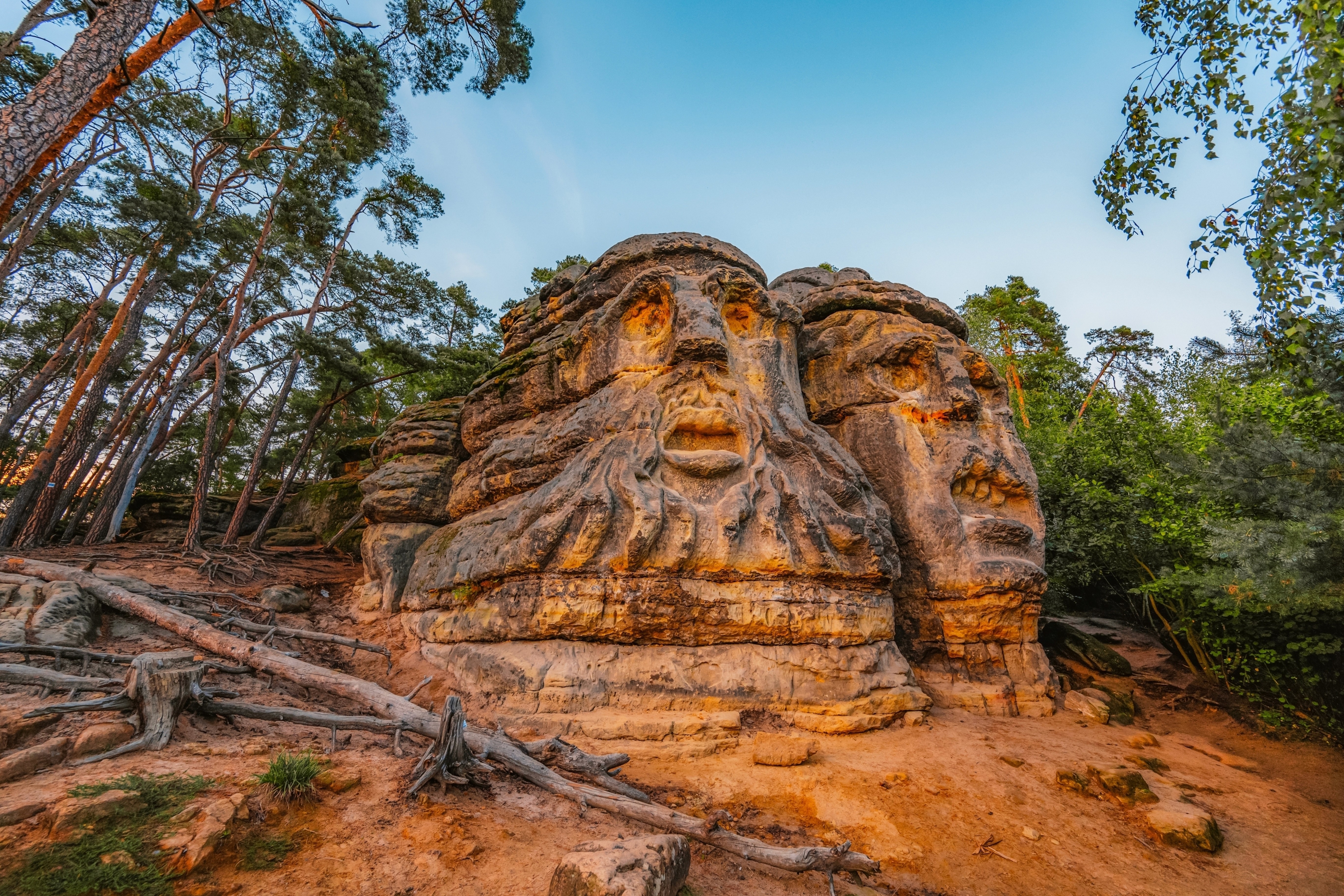
While Prague is undoubtedly a heavy hitter amongst city-trippers, much of Czechia's appeal lies in corners of the country that remain largely unknown to international visitors. Just an hour's drive north of the capital, castles carved into cliffs, towering rock formations, and a smattering of unusual sights sit tucked away in historic towns and dense forests.
Polarsteps Travel Editor Claire Bissell boarded the sleeper train from Amsterdam to Prague, then traveled north to explore Central and North Bohemia. She shares her experiences and stand-out spots from her stay.
Claire traveled to Czechia courtesy of Visit Czechia in collaboration with Central Bohemia and Region Liberec. For a more detailed account of what she got up to, check out her Polarsteps trip. |
|---|
Central Bohemia
Chapel of Bones, Mělník
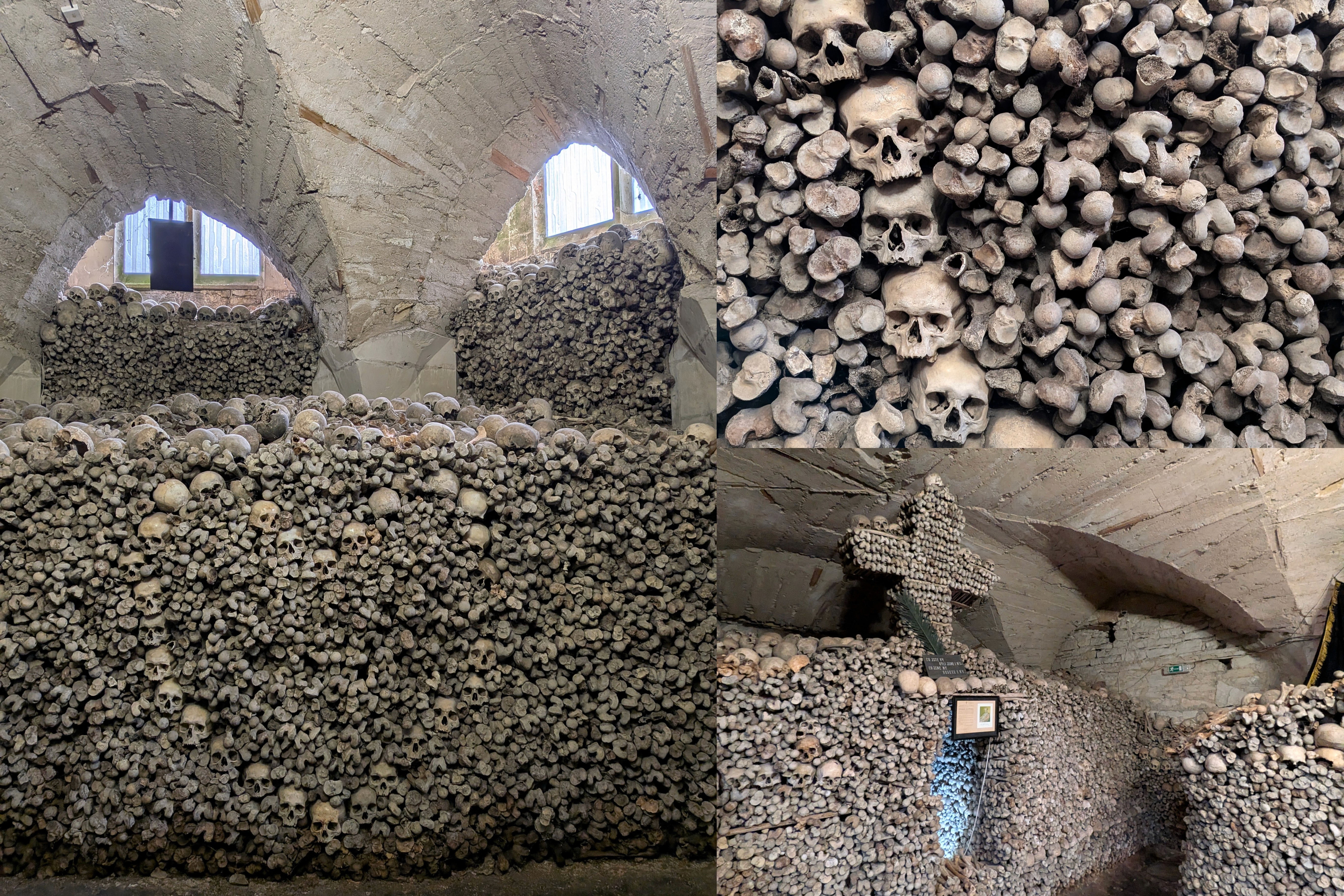
Beneath the Church of St Peter and Paul in the hilltop town of Mělník, an ossuary holds the skeletal remains of an estimated 10,000–15,000 people. The bones date back to the 16th century (mainly victims of the plague and the Thirty Years' War) and were placed here when space ran out in the churchyard. The site was sealed shut for several hundred years, until 1910 when Czech anthropologist Jindřich Matiegka reopened the crypt and began stacking the bones in organized piles and patterns.
Upon descending the stairs, I already felt an uneasiness begin to rise in me, and there is something confronting about having hundreds of skulls seemingly staring back at you. It was hard to deny the presence and inevitability of death, and I'm guessing that was exactly the vibe Matiegka was going for — especially considering the display of bones skillfully arranged to spell out the words “Ecce mors” (Latin for “Behold death”).
Opening Hours
The ossuary has seasonal opening hours which change throughout the year. Current schedules are published on the official ossuary website. Off-season visits are available for groups by reservation.
Getting there
Mělník is easily reached from Prague by bus (45min from Nádraží Holešovice) or direct train (1hr from Prague’s main train station). The church is around a 20-minute walk from Mělník train station. Driving from Prague takes 40–50 minutes depending on traffic.
Václav Levý trail
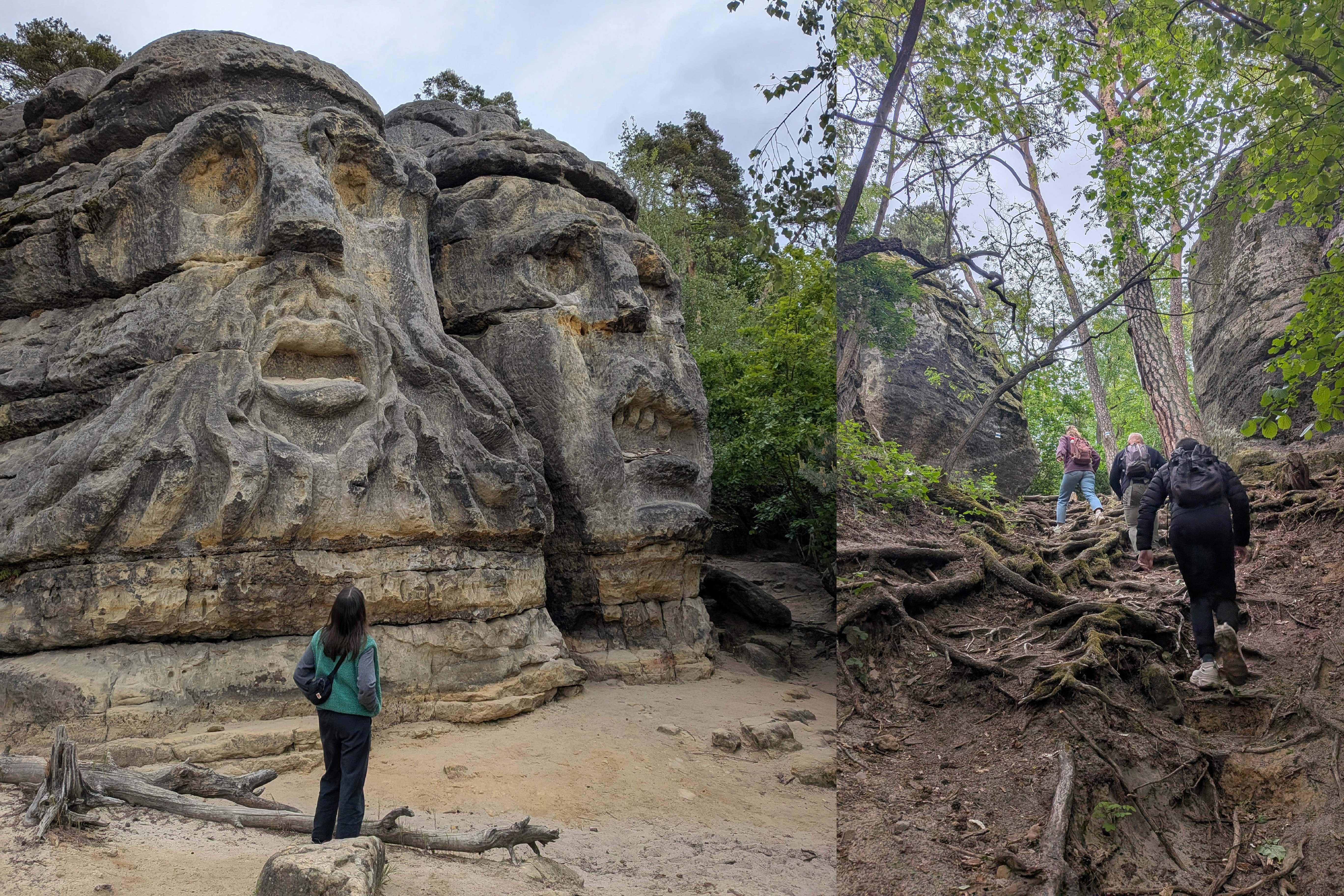
Hidden in the Kokořínsko forest near the village of Želízy lies a series of sculptural rock carvings by Czech artist Václav Levý. During the 1840s (before he became famous), Levý spent five years chiseling away at the area’s sandstone rocks, leaving a legacy of spectacular, and somewhat creepy, sculptures. The works are now connected by an 11km hiking route, leading over exposed tree roots and weaving through narrow corridors between the rocks. I literally stopped in my tracks when we rounded a corner to be confronted by two demonic faces towering over us — the 9m-high ‘Devil's Heads’ are undoubtedly the highlight of this trail. Fun fact: alongside the likes of Mt Rushmore (USA) and the bust of Mao Zedong in Changsha, China, Levý’s carved stone heads are among the largest in the world.
Getting there
The trail is best reached from the villages of Liběchov or Želízy, both of which are accessible by car or public transport from Prague. If traveling by public transport, take a train to Mělník, then a local bus, or take a direct bus from Prague (about 45–60 minutes total travel time). From either starting point, the trail (11km) is clearly marked with blue hiking signs.
From Mělník, take a local bus to Liběchov (10 minutes) to reach the trailhead, which begins right in the town. Look for blue waymarkers to easily find your way, along with the official route map. The trail also passes through the village of Želízy, which offers a handful of rustic cafes and bus links back to Mělník.
Pokličky rock formations
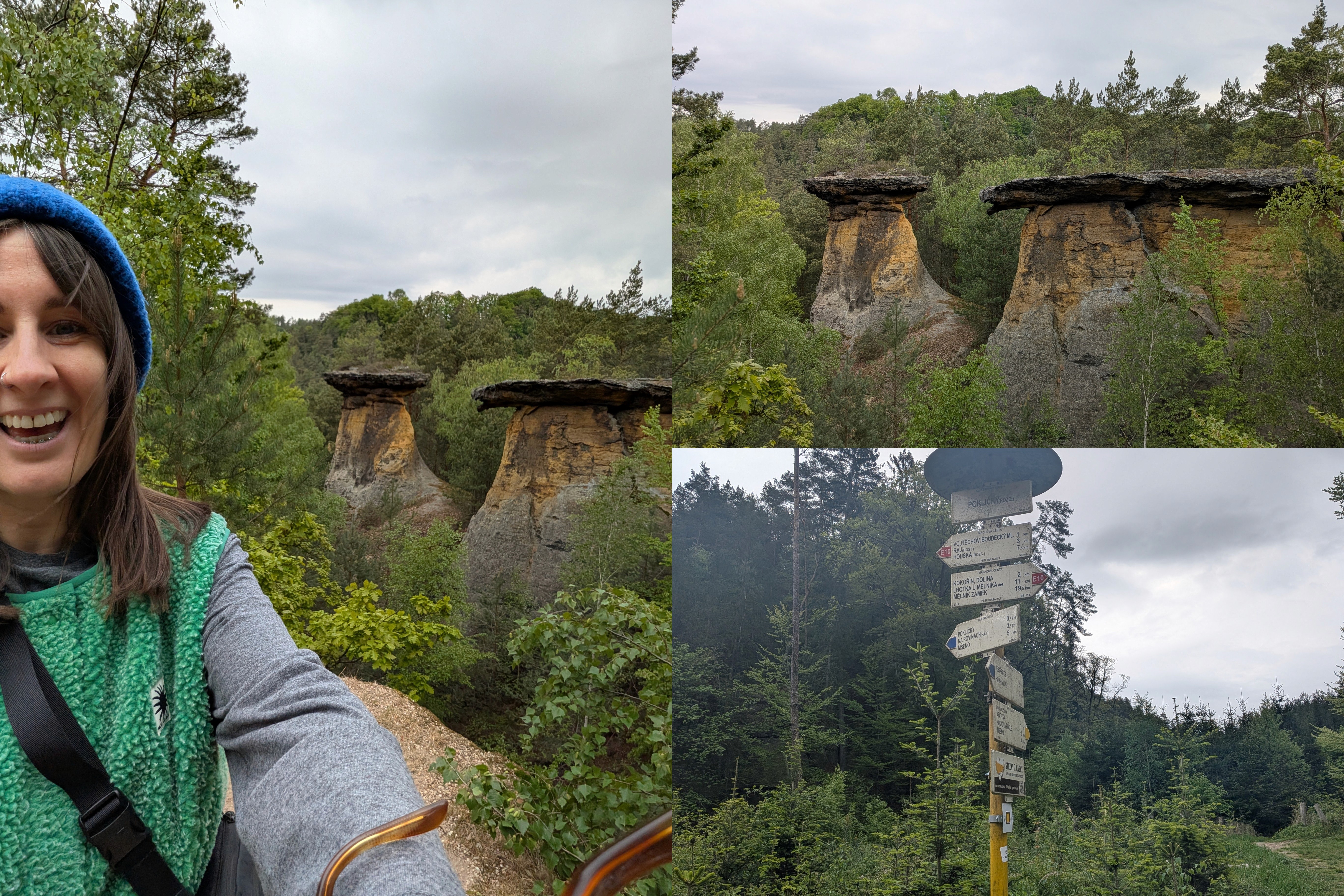
The Kokořínsko Protected Landscape Area is more about weather-worn wonders than rocks carved by human hands. Its peculiar formations are the result of differential erosion: softer rock at the base wore away faster than the harder cap above, leaving wide, flat-topped boulders perched precariously on the narrower base. Pokličky roughly translates to "little lids", which feels like an apt description for the mushroom-like shape of each pillar.
There are two ways to visit: the quickest is to park nearby and climb the small flight of stairs directly up to the formations (a good option if you're short on time), or you can follow an 8km circular hiking route from the village of Mšeno. Bonus: Combine Pokličky with nearby Kokořín Castle, a well-preserved Gothic fortress rising from the wooded valley floor.
Getting there
For the 8km circular hiking trail: From Prague, either take a train to the village of Mšeno via Mělník (1–1.5hr) or drive (1–1.5hr). From Mšeno, follow the blue-marked hiking trail through the Kokořín Valley to Pokličky. The 8km circular route takes around 1.5–2.5 hours to complete, passing Pokličky halfway.
For the short walk: From Prague, drive about 1–1.5 hours to this car park, then follow marked trails to Pokličky (10–30 minutes).
North Bohemia
Sloup Castle
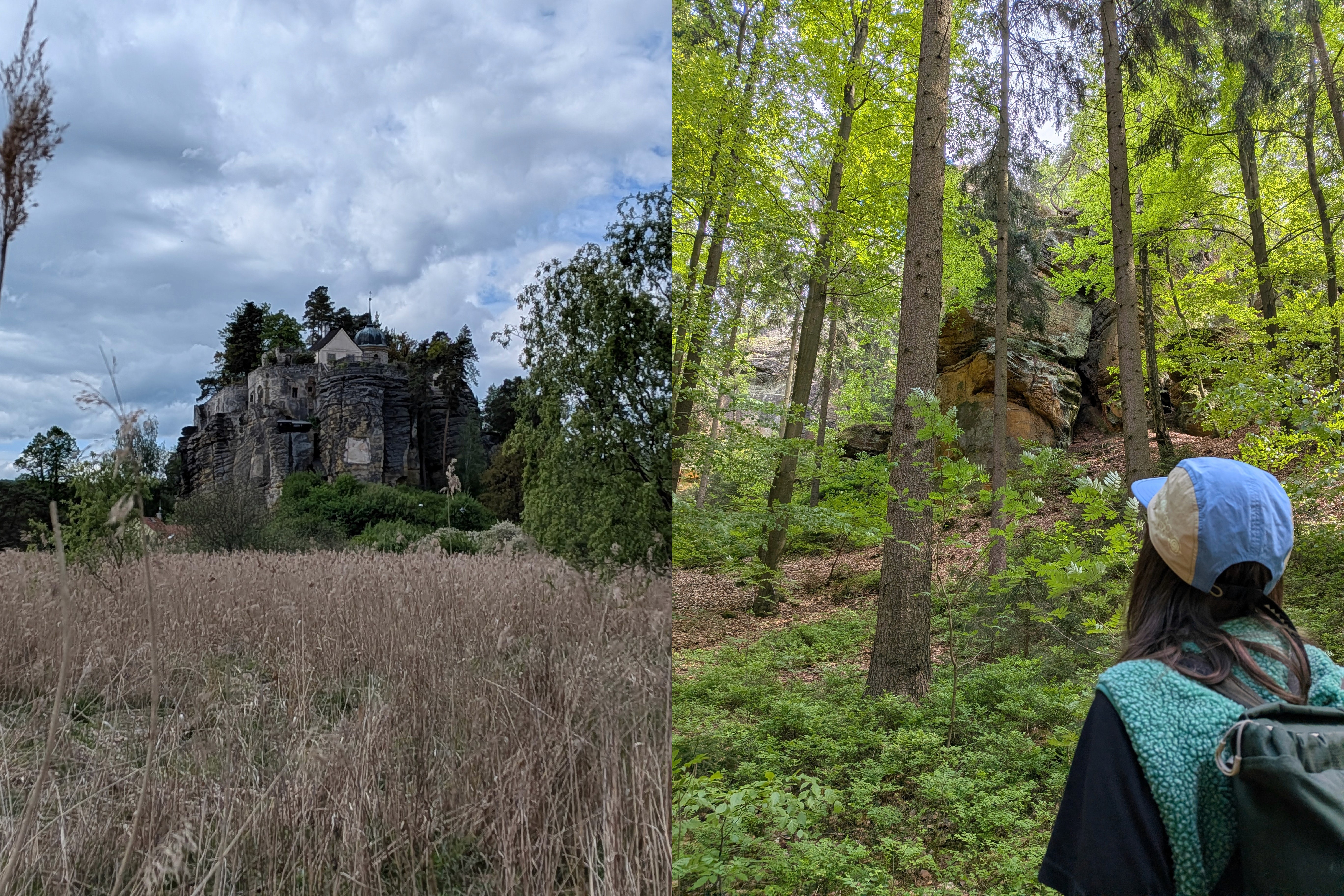
Dating back to the 13th century, Sloup Castle was carved directly into a freestanding sandstone pillar. It started life as a small cave dwelling, and the upper sections were added over subsequent centuries. The visual spectacle is a castle that appears to grow directly out of the rock. What’s particularly appealing about visiting the castle is the neighboring forest laced with hiking trails. We stomped along shaded trails and past sandstone formations, occasionally emerging from the trees to different vantage points overlooking the castle. Tip: follow this route, which will also lead you past the Rock Chapel of Our Lady of Lourdes — a stone-carved chapel hidden in the woods.
Getting there
Sloup Castle is about 1.5–2 hours by car from Prague, with a paid car park located directly below the castle entrance. A map of local walking trails is displayed in the castle car park. If traveling by public transport, the nearest transport hub is the town of Nový Bor, where you can connect to the castle via local buses or taxis. Public transport is possible from Prague, but is generally slower and less straightforward than driving.
Panská skála
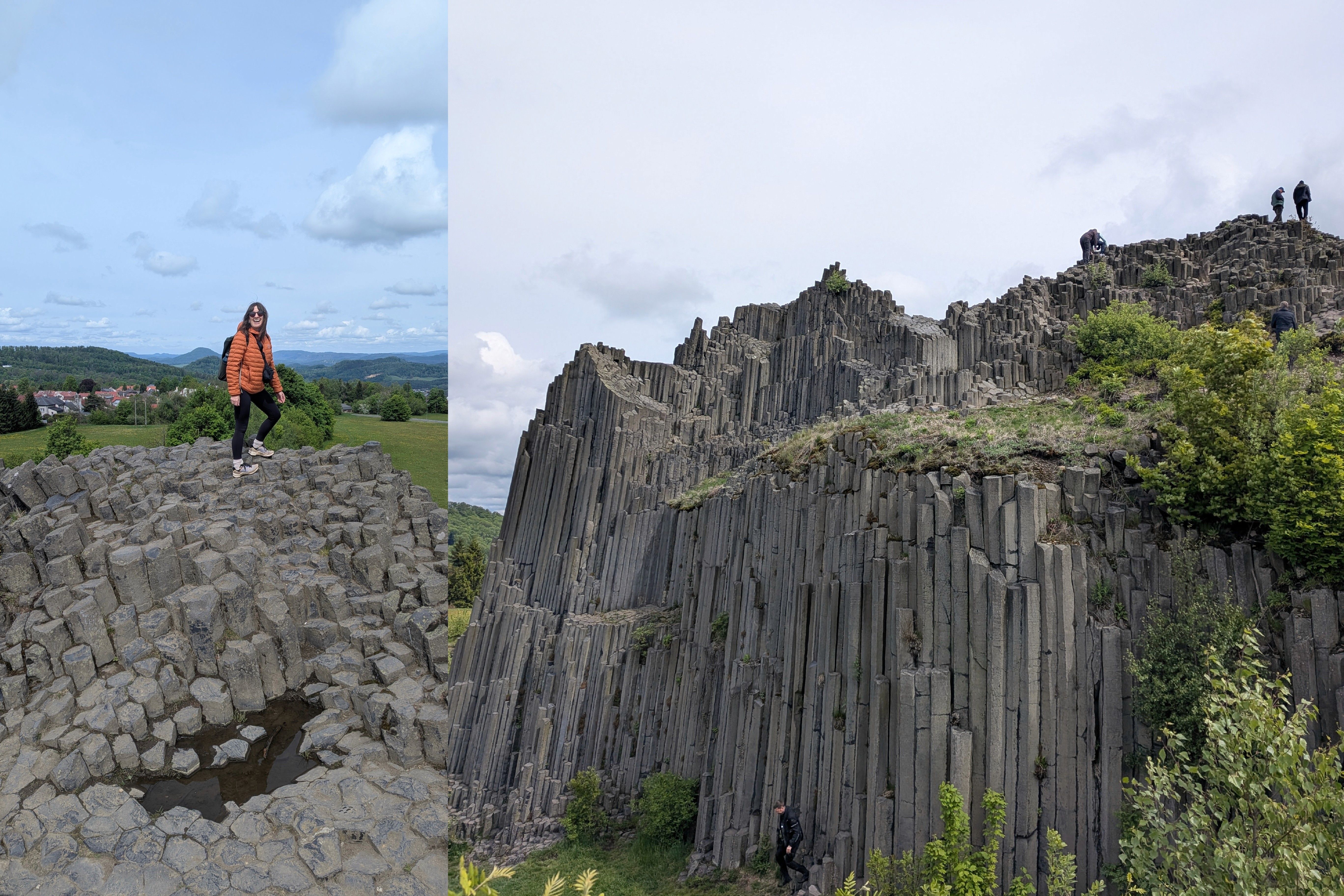
I spent most of the trip admiring the region's smooth, weathered sandstone formations, but this stop was something else entirely — proof that nature is just as capable of sharp angles and geometric precision. Formed millions of years ago when volcanic magma slowly cooled and cracked to create pillars, this basalt beauty’s nickname is the "Stone Organ" (Kamenné varhany) and is known for featuring in the classic 1952 Czech fairytale ‘The Proud Princess (Pyšná princezna)’. Some of the columns extend 12 meters above the ground, and it’s possible to climb them for unobstructed views over the surrounding countryside.
Getting there
From Nový Bor, take a local bus to the neighboring town of Kamenický Šenov (40 minutes), then walk to Panská skála. The site is around a 20-minute walk outside of the town. Driving from Prague takes around 1.5 hours, and there’s a paid car park right beside the formation. Cyclists can reach it via the Varhany route, a dedicated cycle path that runs alongside the former Česká Kamenice–Česká Lípa railway line.
Inspired to visit Central and North Bohemia? See Claire's full itinerary in the app and start planning your own trip! |
|---|
Cover image: zedspider/Shutterstock

Claire Bissell
Senior Travel Editor


