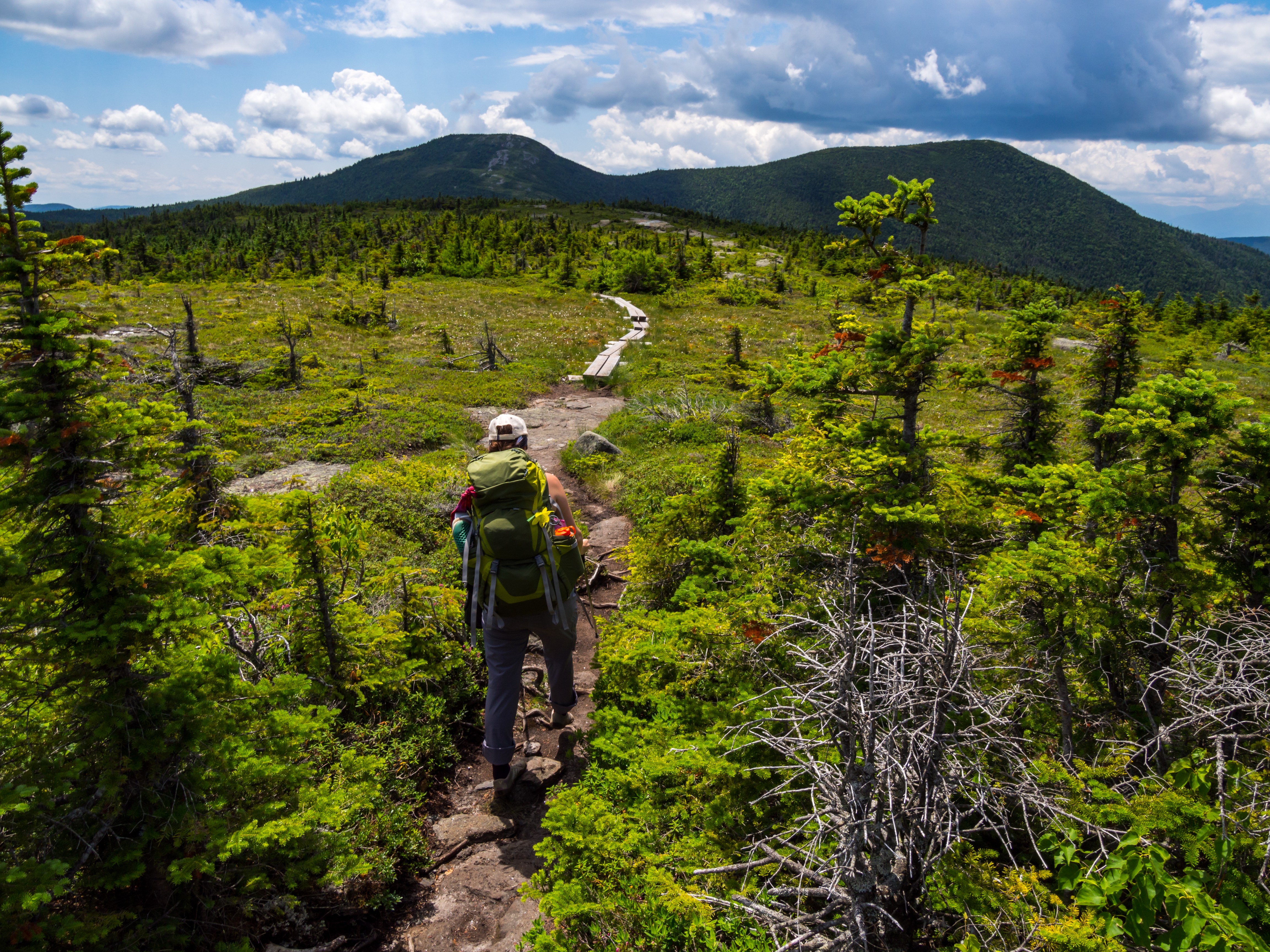
A look at trail life, planning, and what matters most when you’re out there, with insights from Polarsteps travelers.
What is the Appalachian Trail?
The Appalachian Trail (AT) runs roughly 2,200 miles (3,540km) from Springer Mountain, Georgia to Mt Katahdin, Maine, passing through 14 states and following the spine of the Appalachian Mountains. Every year, over 3,000 people set out to thru-hike the AT, and about 25–30% finish, walking the entire length in an average of six months.
At its core, the AT is a (really) long hike, but that’s a small part of why people keep coming back to it. The trail has a way of narrowing life down to the basics: walking, eating, sleeping, and doing it again the next day. That daily rhythm, shared with other hikers, becomes its own way of life. For many, the draw isn’t just reaching Katahdin or Springer, but settling into that temporary world.
Whether you're dreaming of a thru-hike or planning a section or day hike, this guide covers what you need to know, from logistics and planning to trail culture and key stops along the way. It draws on insights from Polarsteps travelers who've walked the miles themselves to give you a realistic picture of what awaits.
Planning your Appalachian Trail thru-hike
One of the first decisions you’ll make is which direction to hike: northbound (nobo, in AT lingo) or southbound (sobo). The majority of hikers choose the nobo route, enjoying a gentler start on Georgia’s less technical terrain in the spring, and arriving in Maine to fall colors before the harsh New England winter. Most start in April or May, following spring blooms and arriving in New England in time for fall colors.
Northbound thru-hikers (nobos) have to deal with heavier crowds, often moving in what’s known as The Bubble, a loose wave of people starting around the same time and hiking at a similar pace. Towns, shelters, and campsites can feel busy, especially during the first few weeks, but the upside is that you quickly feel part of a community.
“Day 30, Smoky Mountains: Arriving at the shelter, it quickly becomes crowded. I gather wood and build a fire in the fireplace. The day ends with a new card game (99) for me with a group I met yesterday, and around hiker midnight [9pm], we're all in bed… Despite the snoring chorus, or perhaps because of it, I sleep well.” — Eva Liefting (Grouse)
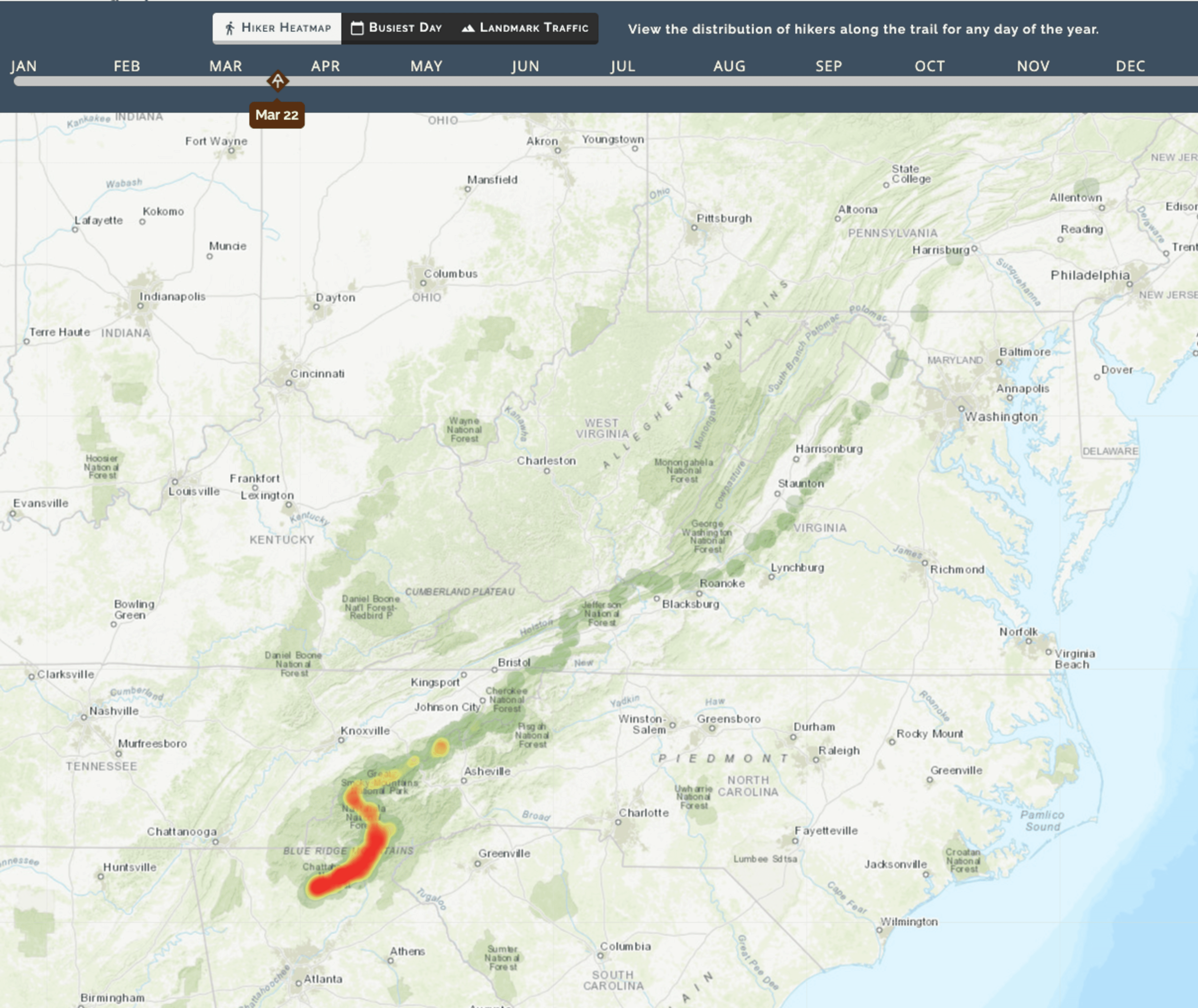
Heatmap/WhereAreTheHikers
Sobos trade crowds for a quieter hike, but they start with the rugged terrain of Maine and New Hampshire, faced with steep climbs, limited bail-out points, and spring conditions that often mean mud and bugs. For many, the space and solitude are worth it, along with the appeal of getting the hardest terrain out of the way first. Most begin in late May or early June, once snow has cleared from Mt Katahdin.
Some experienced hikers choose earlier start dates or shoulder seasons to avoid crowds entirely, but if you want to do this, keep in mind that winter conditions require specialized gear and serious grit.
Section-hiking the Appalachian Trail
Not everyone can dedicate six consecutive months to hiking, so many people choose to approach the trail in sections. You can approach it in lashes (long-ass section hikes), knocking out a few hundred miles in one go, or sashes (short-ass section hikes), chipping away at shorter pieces.
Section hiking does come with trade-offs. Each trip means sorting out transportation to and from trailheads and readjusting to carrying a heavy pack after each reentry. Thru-hikers endure that adjustment once, then typically move through the rest of the trail hardened (read: calves of steel) and capable of longer, easier distances.
Some hikers go with the flip-flop approach. Instead of hiking straight north or south, flip-floppers start in one section, skip ahead to avoid crowds or harsh weather, and return later to fill in the gaps. Even if you hike the trail in sections or as a flip-flopper, if you manage to complete the entire route within a year, you’ve still officially earned the ATC’s title of thru-hiker.
“I chose to flip-flop my 2025 thru-hike for three main reasons: environmental impact, solitude, and community respect. Avoiding the bubble helps prevent overcrowding and trail widening, and supports local businesses during their slower periods, with the added benefit of more open hostel beds. It also makes for a quieter experience overall, with fewer but deeper connections along the way.” — Christopher Flow (Kaleidescope)
Tip: Share your itinerary on ATCamp, the Appalachian Trail Conservancy’s (ATC) voluntary hiker registration platform, to see how many others plan to start when you do. |
Key sections of the Appalachian Trail
Over the course of 2,000 miles, the character of the trail changes again and again. Some sections carry bigger reputations, standing out for their scenery, difficulty, or simply how they feel underfoot.
Great Smoky Mountains (Tennessee/North Carolina border)
This classic section reaches the AT's highest point, Kuwohi (Clingmans Dome), and offers some of the most beautiful views. Hikers enjoy diverse terrain, plenty of shelters, and a strong sense of trail community.
“Smokies day 1: A long day. 15.1 miles, 4,800 feet of climbing, 2,250 feet of descent. The nature is stunning. Every step is worth it. During the climb I noticed how the landscape slowly shifted from spring back into winter as I gained elevation. Less than 100 meters later I was suddenly walking through endless fields of small white flowers. So beautiful and completely unexpected.” — Frank Dutman (Heineken)
Roan Highlands (North Carolina/Tennessee border)
The Roans feature the trail’s longest stretch of high-elevation balds (open, grassy mountaintops largely free of trees) with sweeping views and the famous rhododendrons that bloom in June.
It didn't take long before I understood why so many people were there, because the Roan Highlands are incredibly beautiful. We hiked over three grassy peaks: Round Bald, Jane Bald, and Grassy Ridge Bald, all equally wow-worthy. — Laura Derks (Minnie)
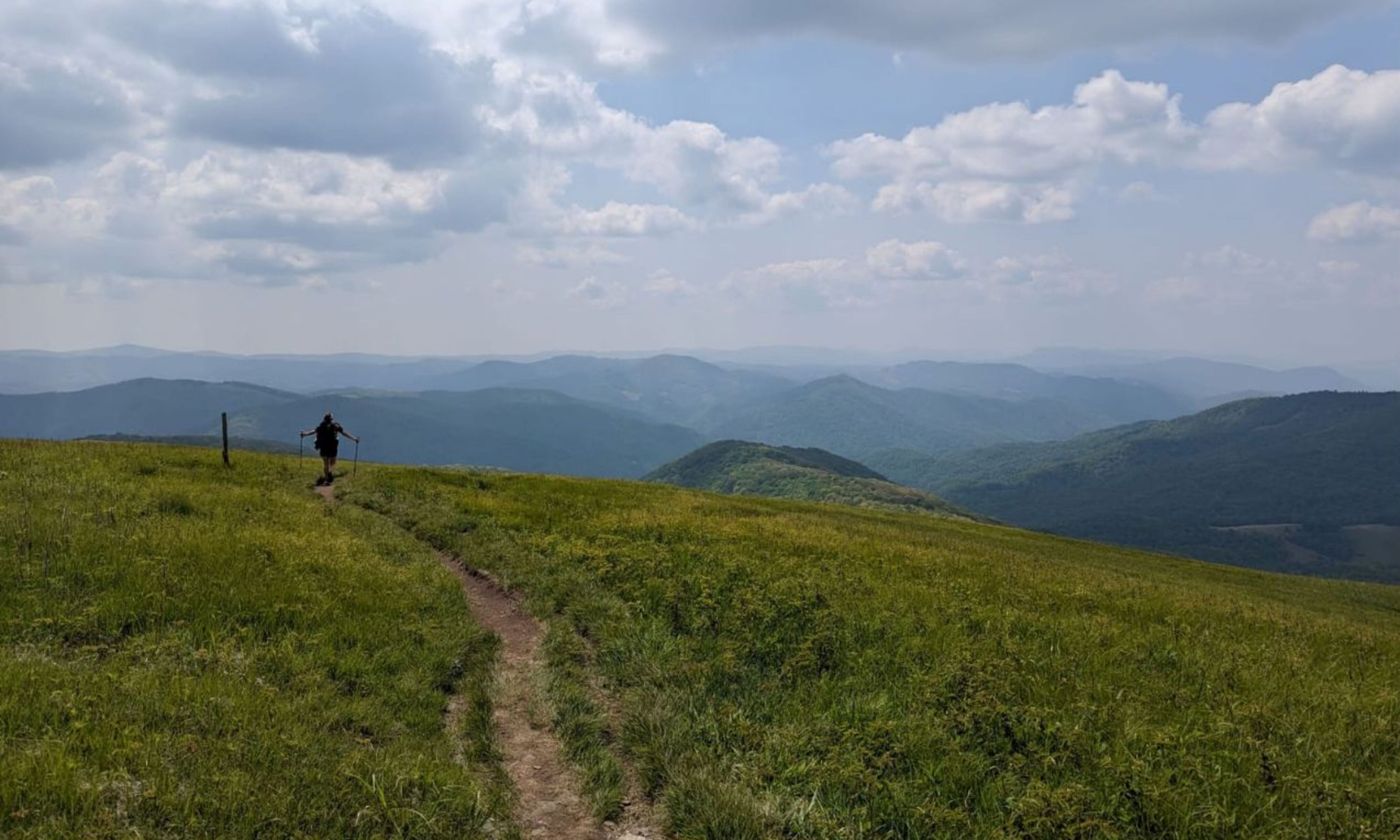
Laura Derks/Polarsteps
Grayson Highlands (Virginia)
One of the AT’s most beloved sections, home to wild ponies roaming in open meadows, plus stunning rocky outcrops and grassy balds.
“The Grayson Highlands are known for their wild ponies, and they didn't disappoint. They approached us curiously and were very interested in the salt (sweat) on our hands, arms, and legs.” — Eva Liefting (Grouse)
Shenandoah National Park (Virginia)
With about 100 miles of relatively gentle terrain, frequent road crossings, and waysides for rest and resupply, Shenandoah is one of the trail’s more accessible sections. Its hardwood forests are home to abundant wildlife, including deer and black bears.
“[We saw a] variety of animals, including two deer calmly nibbling on some small plants a few meters away, a pair of dung beetles with a perfectly round ball, dozens of lightning-fast squirrels, and brightly colored and cheerfully singing birds.” — Laura Derks (Minnie)
Pennsylvania Rocks (Pennsylvania)
This 230-mile stretch features rocky terrain that's tough on feet and footwear. The uneven rocks can slow your pace and wear down even well-conditioned hikers.
“Also known as Painsylvania or Rocksylvania, [this section is] famous for stones and rocks, and rattlesnakes, mosquitoes, blackflies, and gnats.” — Frank Dutman (Heineken)
The Whites (New Hampshire)
The White Mountains include some of the trail’s most rugged terrain, including the Presidential Range with Mt Washington.
“Via South Carter Dome, Middle Carter Dome, and North Carter Mountain, we arrive at Mt Moriah. The summit offers a 360-degree view; you see the entire Carter Range, where I hiked today and yesterday, and beyond that, the Prezies (Presidential Range), with, of course, Mt Washington as its highest point. It's incredible to look back at all these enormous mountains and think that I hiked there just a few days ago.” — Eva Liefting (Grouse)
The 100-Mile Wilderness (Maine)
The most remote section, with no resupply points for 100 miles. The terrain is rugged, muddy, and rooty, with frequent river crossings that require careful judgment.
“Day 169: A strong introduction to the Wilderness, and it deserves the name. It is wild and untouched out here. The trail is challenging. Lots of rocks and roots, steep but short climbs and descents, and many river crossings in Crocs.” — Frank Dutman (Heineken)
Baxter State Park and Mt Katahdin (Maine)
The AT’s dramatic northern terminus includes a challenging summit climb and an emotional finish for nobo hikers.
“The view is phenomenal. All the forests, lakes, and mountains in the distance. So much nature, so quiet. Finally, we can't hold out any longer and walk the last 2.5km to the summit. When I see the iconic Katahdin sign in the distance, I burst into tears. The end, the last few meters. I walk close to the sign but postpone finishing for a while. As soon as I touch the sign, it's truly over. There's no AT left to hike. From Springer Mountain to here. I sit in silence for half an hour at the summit before finally walking the last two meters to the sign. There are tears of joy, fatigue, and pride. 170 days. I don't know how, but I did it. I can't describe the feeling.” — Eva Liefting (Grouse)
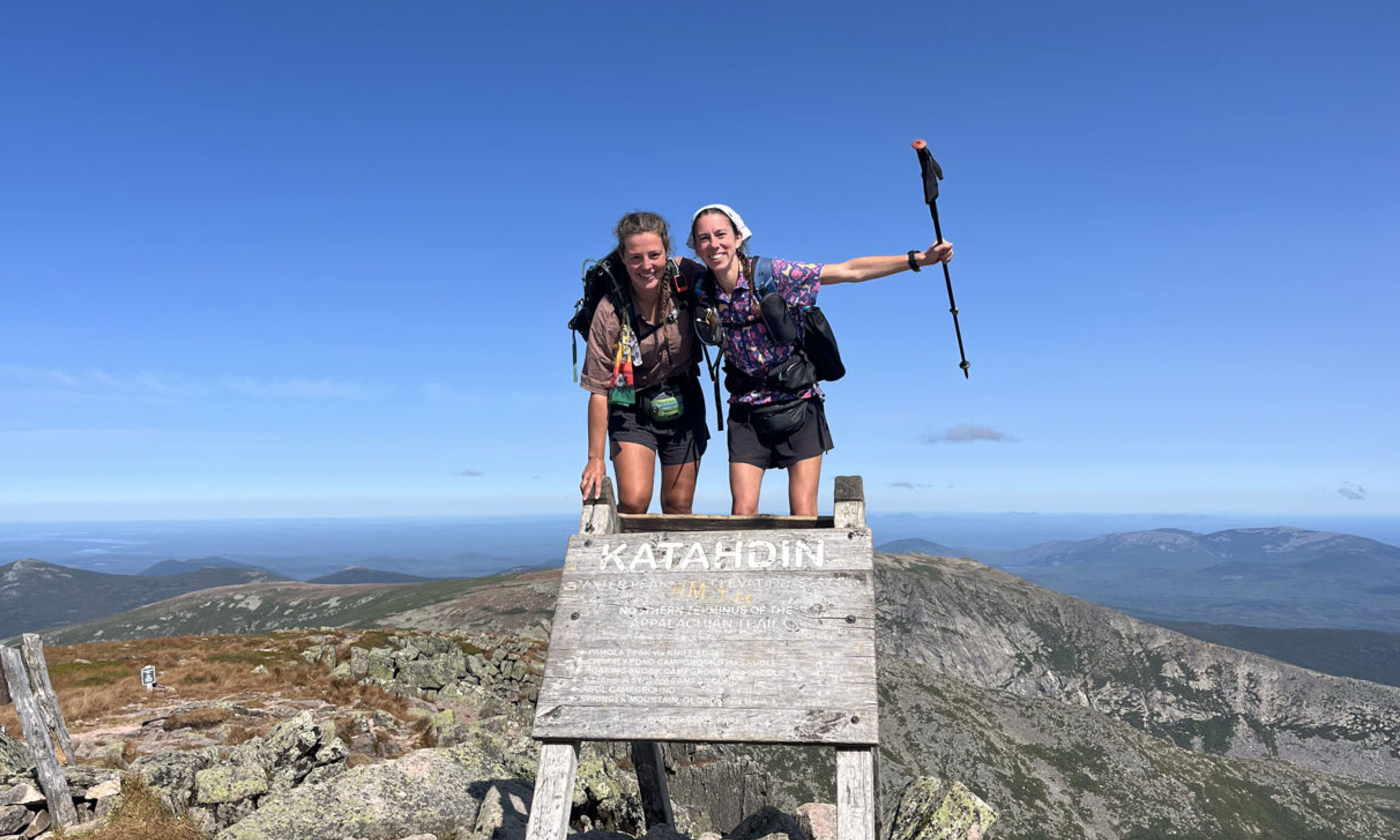
Eva Liefting/Polarsteps
Appalachian Trail towns and landmarks
Just as memorable as the miles are the towns and landmarks along the way. These are a few of the well-known stops for resupply and rest that often mark emotional milestones or cultural touchpoints.
Amicalola Falls State Park (Georgia)
For most nobos, Amicalola Falls is the true starting point. The visitor center is a common first stop for trail history, logistics, and a last cafe break before heading up the Approach Trail to Springer Mountain. You can pick up your official AT hiker tag, and you’ll get a quick briefing on trail safety and etiquette.
Neels Gap/Mountain Crossings (Georgia)
“Apparently, this is the place where most AT hikers give up (which surprises me, since you've only been on the trail for four days). That's also why there's a tree full of shoes. At Neels Gap, the trail runs right through a store — Mountain Crossings — where you can buy everything for the trail, from tents to bagged meals. There are also hiker boxes, large containers where you can leave things you no longer want to take.” — Laura Derks (Minnie)
Damascus (Virginia)
Known as 'Trail Town USA', Damascus is a key social hub and reset point. Many hikers plan their arrivals to coincide with the Trail Days festival, held annually in mid-May.
“Over the next few days, the town of Damascus will be transformed into a festival site for Trail Days, a kind of Appalachian Trail festival attracting both current and former thru-hikers. There will be stalls from outdoor brands, hiker pampering like foot massages and free haircuts, games, workshops, lectures, music, theater, and plenty of free food. In short, something we didn't want to miss.” — Laura Derks (Minnie)
McAfee Knob (Virginia)
“We made it to McAfee Knob, which is the most photographed spot on the whole Appalachian Trail. It is a beautiful rock outcropping jetting over the valley, and the layers of clouds above and below made sitting atop and just viewing with breakfast into a changing story of nature and wonder, each gust of wind shifting the clouds and causing light to hit the peaks and valleys with new energy.” — Christopher Flow (Kaleidescope)

Christopher Flow/Polarsteps
Harpers Ferry (West Virginia)
“Harpers Ferry is perhaps the most famous town on the entire AT and is also called ‘the psychological halfway point.’ You're almost halfway there, and many people start their hike here (i.e., if you don't hike continuously nobo or sobo, but split your hike into two parts). It's also home to the Appalachian Trail Conservancy. Hikers can have their iconic Polaroid photo taken [for the thru-hiker archive].” — Laura Derks (Minnie)
Monson (Maine)
The last stop before the 100-Mile Wilderness for nobos, and the first resupply point for sobos, Monson is a place to stock up and reconnect with other hikers at a pivotal point. Hostel culture runs deep on the AT, and especially so here, as hikers come together to rest, recharge, and compare plans for the trail ahead.
"Shaw's, the last hostel on the trail, is known for its fantastic breakfast, and the eggs, potatoes, and pancakes are perfect. After breakfast, I have to resupply for eight days and organize all the logistics for this last long section." — Eva Liefting (Grouse)
The Appalachian Trail culture and community
The Appalachian Trail has a distinct culture, with its own language, traditions, and an unspoken code of looking out for one another. Community forms naturally at shelters, in trail towns, and along the miles in between, with hikers drifting together and apart as paces and plans change.
“Despite the less-than-pleasant trail today, the atmosphere is good… It’s precisely these kinds of days that strengthen the bond with your fellow hikers just that little bit more (shared trauma 😜). — Laura Derks (Minnie)
Tip: Join the r/AppalachianTrail26 Reddit community to connect with fellow 2026 thru-hikers sharing questions, advice, and trail plans. |
Trail names
One of the first signs you’ve stepped into trail culture is receiving your trail name. These nicknames are a longstanding tradition, used in place of given names, and typically earned on the trail. You’ll hear names like Moonflower, Treebeard, Rocket, Sparrow, Pockets, or Popcorn. It won’t take long before you find yourself using your trail name by default.
“Day 6: I got my trail name tonight: it’s CREAMSICLE. Because of my poncho and the softness of my soul apparently ;)” — Gwendal Renault (Creamsicle)
Blazing
Blazing refers to how closely a hiker follows the white blazes that mark the official route. White blazers stick strictly to the trail; blue blazers sometimes take alternate trails; yellow and green blazers skip or hitch sections; and pink blazers adjust their hike to follow a romantic interest. Aquablazing refers to kayaking or paddling part of the route.
“Today we did what is called aqua blazing, where instead of using our two feet to get down the trail, we floated on water and used our arms to propel us! We had to hike three miles in the morning to where the shuttle from Boots Off Hostel was meeting us. They then drove us to the north end of Lake Watauga for us to paddle 10 miles to the south side of the lake where they picked us up and brought us to the hostel.” — Christopher Flow (Kaleidescope)
HYOH (Hike Your Own Hike)
One of the core ideas on the AT is to 'Hike Your Own Hike'. It means there’s no single right way to hike the trail. Pace, plans, and priorities shift over time, and HYOH is a reminder to make choices that work for you.
Zero/nero days
Zero days (full days off) and nero days (very short mileage days) offer time to rest, wash clothes, resupply, and often enjoy something social, like a shared meal.
“Day 64: A real zero. I spent the entire day with SlimJim on the couch. Breakfast was fried eggs with avocado, and lunch was yogurt with fresh fruit. We wore face masks and alternated between sitting and lying on the couch or in bed. It rained all day, which only added to our comfort… We finished the day with a cocktail by the campfire; I could have had worse luck.” — Eva Liefting (Grouse)
Trail magic and angels
Trail angels are the generous souls who provide trail magic: acts of kindness like leaving care packages at shelters, handing out cold drinks at a road crossing, or offering rides into town. Trail magic isn’t a given, which is what makes it special when it happens. Trail angels are often former thru-hikers paying it forward, or locals who enjoy supporting the hiking community.
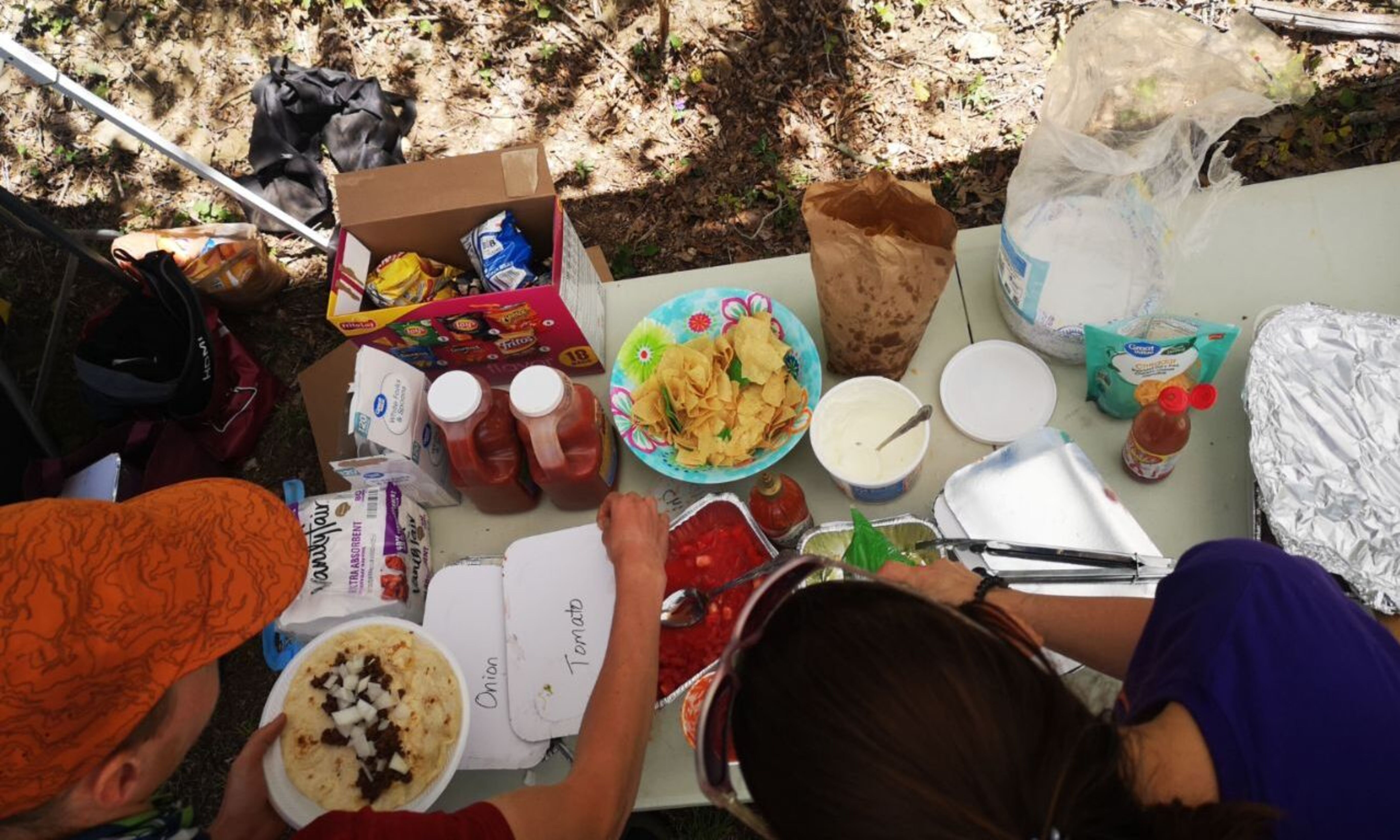
"The best trail magic: former hikers have prepared lunch for us, tacos where we can add all the vegetables we want, plus snacks, and music (I missed that!!!), and even Ziploc bags, toilet paper, small tubes of toothpaste, and trash cans to help us get rid of these last few days. In short, everything we absolutely need." — Gwendal Renault (Creamsicle)
Gwendal Renault/Polarsteps
The quirkier AT traditions
The AT has its own brand of humor. Some traditions are unofficial, slightly absurd, and entirely optional — but widely understood.
Half-gallon challenge:
“The halfway point is of course an iconic moment on the AT, and it should be celebrated in an equally iconic way. Leave that to the hiking community... I present to you: the half-gallon challenge. You buy a half-gallon of ice cream at the Pine Grove Furnace store and then try to somehow devour this insane amount of ice cream.” — Laura Derks (Minnie)
Hike Naked Day:
“Midday I had to rub my eyes. I was seeing it right. A completely naked man with a long beard, not long enough though, and a backpack walking the trail. Then it clicked. Solstice day is Hike Naked Day.” — Frank Dutman (Heineken)
Four-State Challenge:
“The best-known and most attempted challenge. To complete it, you wake up in Virginia, crossing through West Virginia and Maryland before going to sleep in Pennsylvania. It is around 44 miles to complete in a 24-hour period.” — Christopher Flow (Kaleidescope)
Appalachian Trail etiquette and expectations
Life on the AT comes with a few shared expectations that make the trail work for everyone.
Leave No Trace
As with any experience in the wilderness, AT hikers are expected to practice LNT. That is, stick to established trails and campsites, and whatever you pack in, be sure to pack it out, leaving nature as you found it. If a privy (outhouse) is available, use it, and otherwise bury number twos in a cat hole, which should be dug six to eight inches (15–20cm) deep, at least 200 feet (60m) from water sources.
“‘Who stole my cathole?!’ remains my favorite question. Some people are so regular that they have to go as soon as they wake up, so they dig a hole in the evening. And then someone finds your hole in the morning and decides to poop in it.” — Eva Liefting (Grouse)
Appalachian Trail Shelters
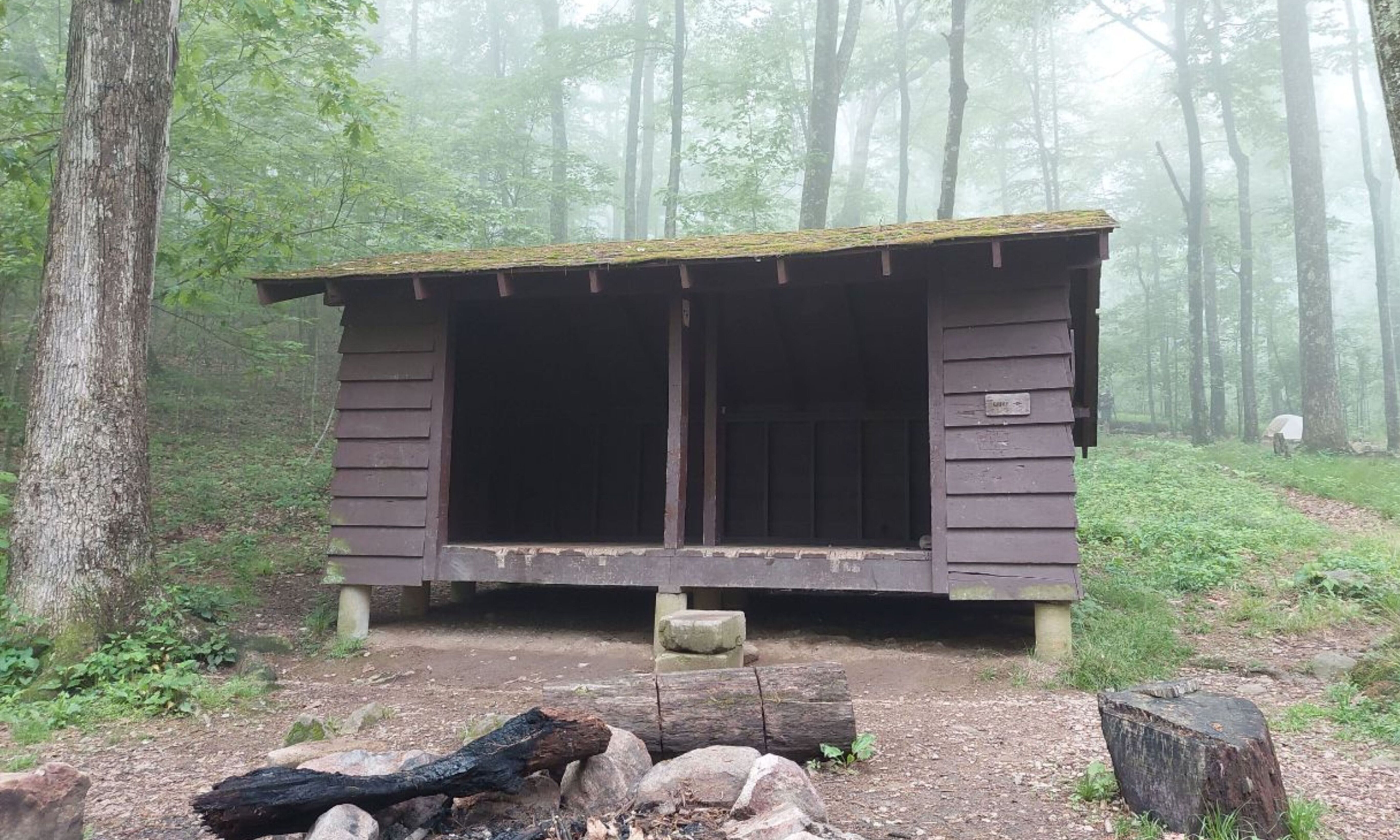
The AT has over 250 shelters: basic, three-sided wooden structures that can offer a welcome reprieve from the elements. Shelters are first-come, first-served, and open to anyone, not just thru-hikers. Leave space for incoming neighbors if you arrive first. Cook and eat outside (ideally 200 feet away) to avoid attracting wildlife, and respect quiet hours (generally 9pm to 6am).
Frank Dutman/Polarsteps
Logbooks
Most AT shelters have logbooks, which you can sign as you please, leaving anything from stories and drawings to valuable info like bear sightings or a note to your tramily (trail family) that you’ll meet them in the next town.
Wildlife and food storage
Black bears are present along much of the trail, and proper food storage is taken seriously. In many areas, bear boxes, cables, or hangs are provided. Some sections require bear canisters. Even where bears aren’t common, mice are persistent and capable of destroying a food bag overnight. Hanging food or using the provided storage is a must. Occasionally, in sections of the trail with high bear activity, you may be instructed to sleep in shelters.
“Just before camp I heard a rustling then saw a mother bear and two cubs running up the hill to get away from me. Not sure if it was my smell. I apologized and got a distant photo, but yay for first bear sighting." — Christopher Flow (Kaleidescope)
Maintainers and ridgerunners
The AT is cared for by local trail clubs made up of dedicated volunteers, many of them former thru-hikers, who clear blowdowns, repaint blazes, and repair shelters. Following closures or reroutes and leaving campsites and shelters better than you found them helps support that ongoing effort.
In high-use areas like the Smokies or the White Mountains, you may also encounter seasonal workers known as ridgerunners. These trained staff patrol the trail to help educate hikers on Leave No Trace (LNT) principles, answer questions, and assist in emergencies.
Dogs
While dogs are allowed on most sections of the AT, the ATC recommends keeping them leashed at all times, and about 40 percent of the trail requires it. Dogs are prohibited in Great Smoky Mountains National Park, at the Trailside Museuhostems and Zoo in Bear Mountain State Park, and in Baxter State Park, requiring detours. Because of the strenuous conditions and added logistics, most thru-hikers don't bring along pets, though dogs are common among section and day hikers.
Preparing for your AT hike
There’s a lot to sort out before your AT hike. Gear choices, timing, logistics, fitness, and expectations all come into focus long before you set foot on the trail. Below are some of the key considerations.
Gear and pack weight
When assembling your Appalachian Trail gear, the top considerations are weight, durability, and familiarity. Aim for a set-up you know how to use and can fix or replace easily. A good base weight (everything except food and water) to target is under 20 pounds (9kg). Do keep in mind that lighter isn’t always better if it means fragile gear or sacrificing too much comfort.
Along the way, you’ll have chances to reassess. Outfitters and hostels often have scales where hikers weigh their packs, which generally become lighter once fine-tuned for trail life. Some hikers send bounce boxes ahead to post offices or hostels, which can be useful for specialty items, seasonal layers, or medications.
"At Pinkham Notch Visitor Center, I weighed my pack: 45 pounds, a bit over 20 kilos. Too much, but I am carrying five days of food. Tonight I start with the heaviest items. Cheese and Milky Ways." — Frank Dutman (Heineken)
Tip: Scroll through the full Appalachian Trail packing list to see what fills a thru-hiker's pack. |
Choosing footwear
Footwear is one of the most personal decisions. Some hikers prefer boots for ankle support and durability, but many choose trail runners because they’re lighter and faster drying. Wet feet are common on the AT, especially in the southern states, so quick-drying shoes, good socks, and foot-care products often matter more than waterproofing.
It’s also common to carry a lightweight second pair of shoes for camp, hostel stays, or water crossings. And whatever you start with, don’t expect them to last the whole way.
“My trail shoes were starting to fall apart after just 440 miles, so instead of pushing them further as the bottom tread was starting to separate, I got my 4th pair of shoes for the trail that will take me to Georgia!” — Christopher Flow (Kaleidescope)
Rain and mud
Rain is a given. While there’s sometimes the option to hunker down and wait it out, you’ll often have to embrace the sog. In addition to the right footwear, lightweight waterproof layers, a pack cover, and dry sleep clothes go a long way. Some hikers even swear by carrying an umbrella.
“It started with a light drizzle, but before we knew it, we were walking for half an hour in a torrential thunderstorm that, once again, my gear (and that of almost everyone else) couldn't handle. Keeping your feet dry is impossible in such a downpour, so I just gave in and happily splashed through all the puddles.” — Laura Derks (Minnie)
Managing food
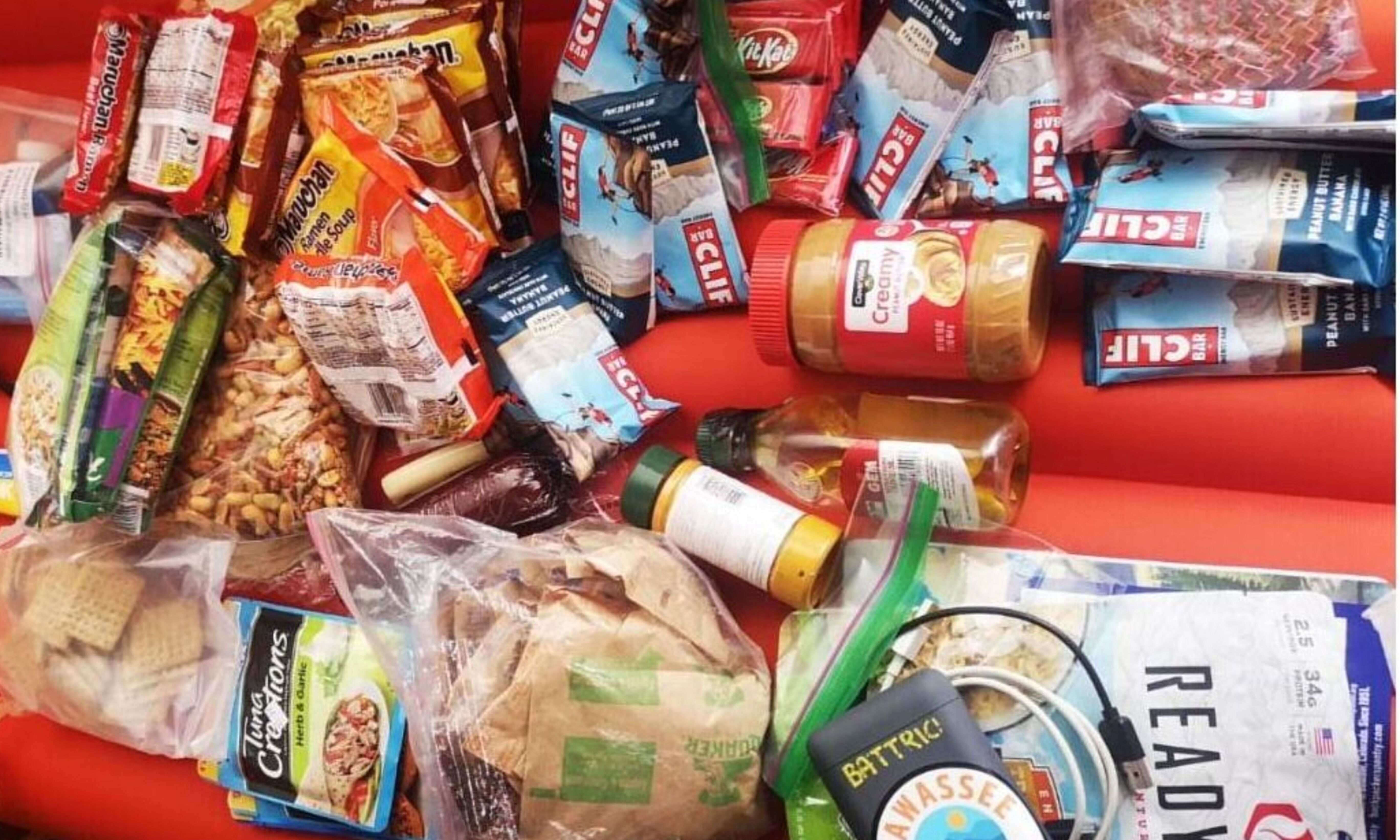
Carrying the 3,000–5,000 calories you’ll need each day requires some strategizing. Most hikers resupply every 3–5 days in trail towns, stocking up on calorie-dense staples like tortillas, peanut butter, and snacks that can survive being stuffed into a pack. A classic dinner is the ramen bomb: a package of ramen combined with instant mashed potatoes, often boosted with olive oil, tuna, cheese, or whatever else is on hand. And after days of trail food, a hot meal and a cold drink in town can reset both your energy and your outlook.
“The primary rule of getting food is weight-to-calorie ratio. To shop like a thru-hiker, throw out any health-related fear of calories you have ever had. With the number of miles a hiker puts in, we have to consume a crazy amount of calories. Some people aim for as many as 6,000 a day, but for most, getting above 3,000 and closer to 4,000 a day is the goal. This means buying and eating some wild, unhealthy foods. Many people eat at least 1-2 [full-size] candy bars a day. Others drink olive oil or eat sticks of butter for the fat.“ — Christopher Flow (Kaleidescope)
Gwendal Renault/Polarsteps
Health and hygiene on the AT
Blisters, chafing, and minor injuries are common on the trail, and managing them early is key. Assemble your first-aid kit around foot care, pain relief, and basic wound treatment. Hand hygiene is also important, as norovirus spreads easily through shelters and towns on the AT.
For hikers who menstruate, periods are another consideration. Some switch to reusable options like menstrual cups or discs to reduce waste and resupply hassle, while others stick with pads or tampons and pack everything out.
Training for the Appalachian Trail
You don’t need to be an elite athlete to hike the AT, but preparation will help. Strength and cardio conditioning are important, but endurance training is what’s going to keep you going when the trail gets hard. Long walks with a loaded pack, stair climbing, and strengthening hips, calves, and feet in the months leading up to your thru-hike can reduce the risk of early injuries.
Appalachian Trail costs and budgeting
The AT itself is free to walk, aside from permits in the Smokies and Shenandoah, but costs add up along the way. You’ll need to factor in food, lodging, laundry, transportation, and occasional gear repairs and replacements.
Most thru-hikers budget somewhere in the range of $1,000–$1,500 per month, though spending varies widely. Frequent zero days, hostel or hotel stays, and eating out will push costs higher, while spending less time in towns keeps them down.
Safety on the Appalachian Trail
The AT is generally safe, and most issues come down to weather, judgment, and preparation.
Inclement weather
Storms can move in fast, especially at elevation, so stay off exposed ridgelines if you hear thunder. Heat exhaustion peaks in summer, and hypothermia risk lingers through spring and fall.
Wildlife encounters
Black bears are common in the Smokies and Shenandoah. They’re not aggressive unless provoked or surprised, and proper food storage is the best defense. Give snakes (rattlesnakes, copperheads) plenty of room if you encounter them. Moose are active in Vermont, New Hampshire, and Maine, and should also be given a wide berth. Check daily for ticks and learn proper removal technique.
“Lyme disease is quite prevalent here. You can spray permethrin on your clothes and belongings for extra protection against ticks.” — Laura Derks (Minnie)
Emergencies
Cell service is limited, so carry an official Appalachian Trail map and download offline maps. A satellite messenger can also be a lifesaver. Know what’s in your first-aid kit and how to use it. Be sure to sign trail registers at shelters and trailheads, as this helps search-and-rescue teams and provides a record for concerned family members checking with trail clubs.
Hitchhiking
Getting to towns and back to trailheads often requires hitching. Many trail-town locals are willing to help hikers, but trust your instincts and hitch with a buddy when possible.
Personal safety
Violent crime is extremely rare but not non-existent. Solo hikers, especially women, should trust their gut. If someone seems off at a shelter, move on. Don’t advertise that you’re alone, and use caution if camping close to roads or popular trailheads, which are more accessible to non-hikers. Consider carrying pepper spray.
Tip: Use Polarsteps for offline GPS tracking and to keep friends and family back home informed. |
Documenting your hike

Frank Dutman/Polarsteps
Most hikers don’t keep a detailed journal for six months straight. The days are long and energy is precious, so documentation often looks like a few notes, some photos, and a longer update written on a zero day.
Polarsteps is built for this kind of approach. You can record your route automatically (even when offline), add photos or notes when you have time, and let everything sync in town or on Wi-Fi. Your trip gives friends and family a way to follow along without constant check-ins, and the app keeps battery use low.
By the end of a long hike, those small updates add up to a clear record — and wildly impressive map view — of where you went and what it looked like. You can share it with friends online through Trip Reels, or print a Travel Book as a tangible keepsake.
“Using Polarsteps turned out to be an unexpected added bonus to this incredible journey. I am grateful that so many people could and wanted to follow along. The messages and reactions in every form added a lot to this experience and helped pull me through the hard moments.” — Frank Dutman (Heineken)
Download the Polarsteps app to start planning and tracking your next adventure. |
For more Appalachian Trail inspiration, check out the full trips of our featured Polarsteps explorers:
Christopher Flow (Kaleidescope)
Cover image: Jonathan A. Mauer/Shutterstock
Brin Andrews
Senior Travel Editor


