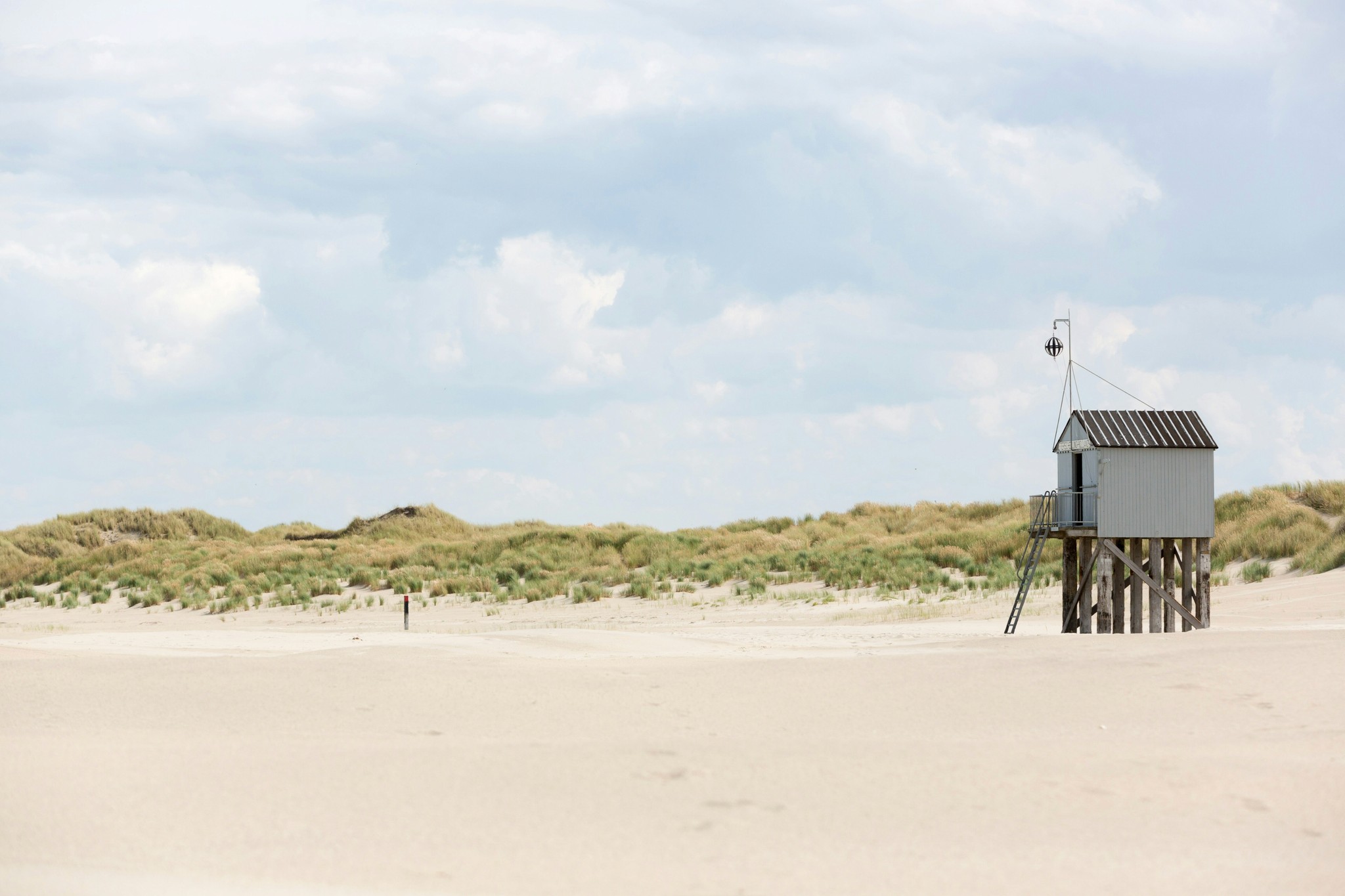
The small island of Terschelling, part of an archipelago located off the north coast of the Netherlands, is no secret among the Dutch. Drawing over 400,000 visitors per year, its beaches and dunes make it an obvious choice for a summer getaway. But with far fewer crowds and experiences that only the off-season unlocks, the cooler months are an ideal time of year to discover this windswept isle.
Polarsteps Travel Editor Claire Bissell set out to explore Terschelling in mid-March. After traveling from Amsterdam by train and ferry, she spent three days exploring the island by bike. She shares her experiences and uncovers the appeal of island life in the low season.
Claire traveled to Terschelling on a trip courtesy of TerschellingPartners and WestCord Hotel Schylge. For a more detailed account of what she got up to on the island, check out her Polarsteps Trip. |
|---|
Wild rides
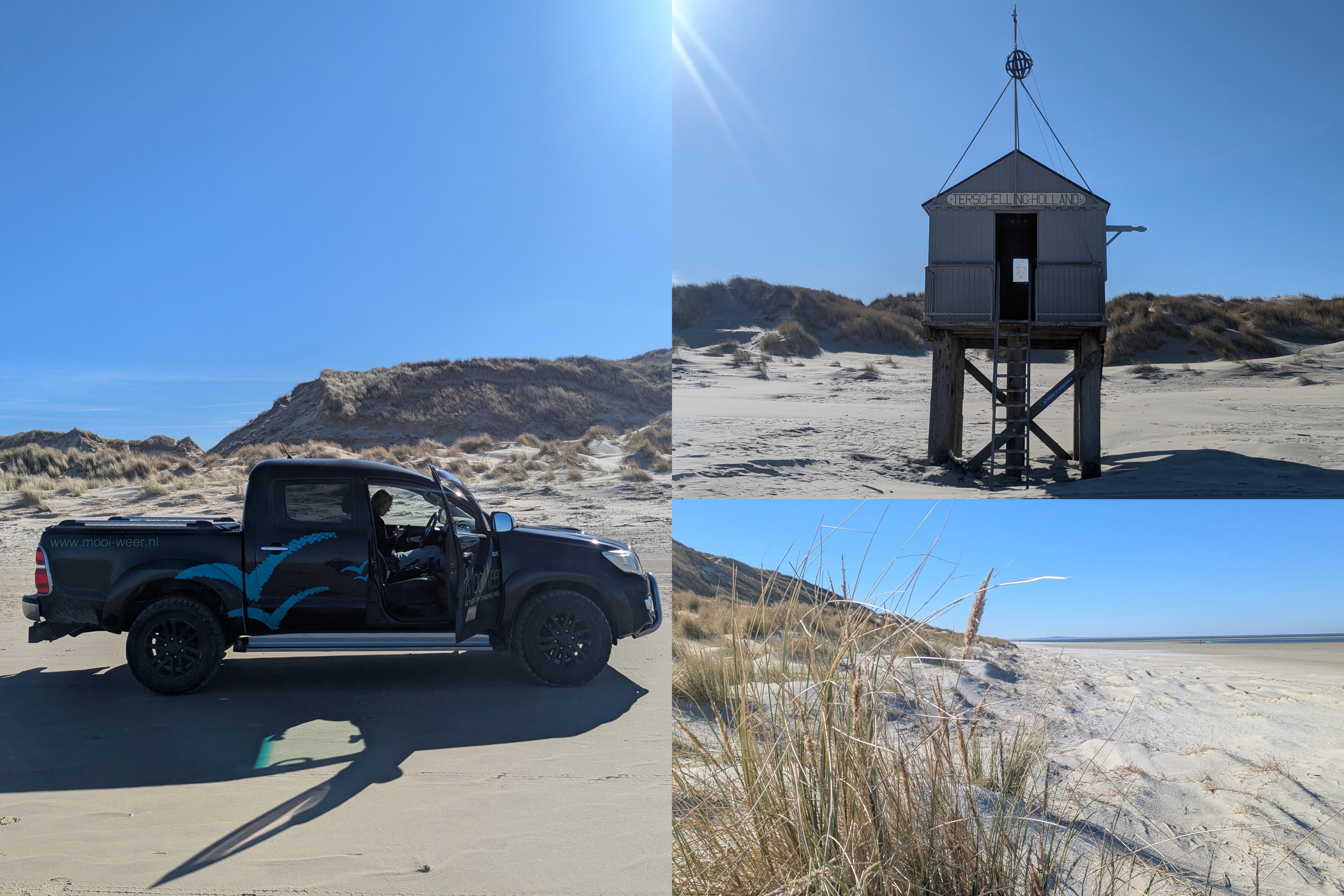
The salty wind whips through the open window, providing a refreshing morning wake-up as we bump and swerve along the beach that runs the length of Terschelling’s northern shore. Fifteen minutes in, and we've passed only a handful of dog walkers and a couple of Land Rovers. Between October and April, local residents and businesses can obtain a permit to drive off-road vehicles along this vast beach.
At 30km long and up to 1km wide at low tide, I am taken aback by the sense of space. We eventually reach Drenkelingenhuisje, a small wooden hut perched on stilts, rising out of the sand and backdropped by grass-covered dunes. It was built in 1863 for sailors who washed ashore after shipwrecking in the perilous North Sea, and stocked with provisions and fire-starting supplies to signal for help. Standing at this spot gives a real sense of just how isolated and exposed this coastline is.
Details: Book your beach tour through MooiWeer. The excursion is only available between October 1 and April 1, lasts 90 minutes, and includes pick-up from your accommodation.
Star-filled skies

Erik Hageman/Flickr
The Boschplaat, a vast nature reserve stretching across the eastern side of the island, is a designated Dark Sky Park. Light pollution is actively kept to a minimum by prohibiting public, commercial, and private lighting, making it a prime spot for some serious stargazing. And gaze I did! My head was permanently tilted backward as I followed a ranger on a guided walk through the reserve, stopping regularly to take in the sky full of stars.
We were lucky to be out on a clear night, though it turns out luck had little to do with the timing. March and April are among the driest months on Terschelling, with minimal cloud cover. And during this time, darkness falls early enough (around 8:30pm by the end of March) that you don't have to stay up too late to spot the Milky Way.
Details: Book a 90-minute ranger-led walk (Saturday nights only) or explore the reserve independently. Be sure to follow the designated pathways and try to avoid using a flashlight, as this disturbs nocturnal animals and impacts your night vision. The best time to plan a visit is during a new moon.
Dune safari
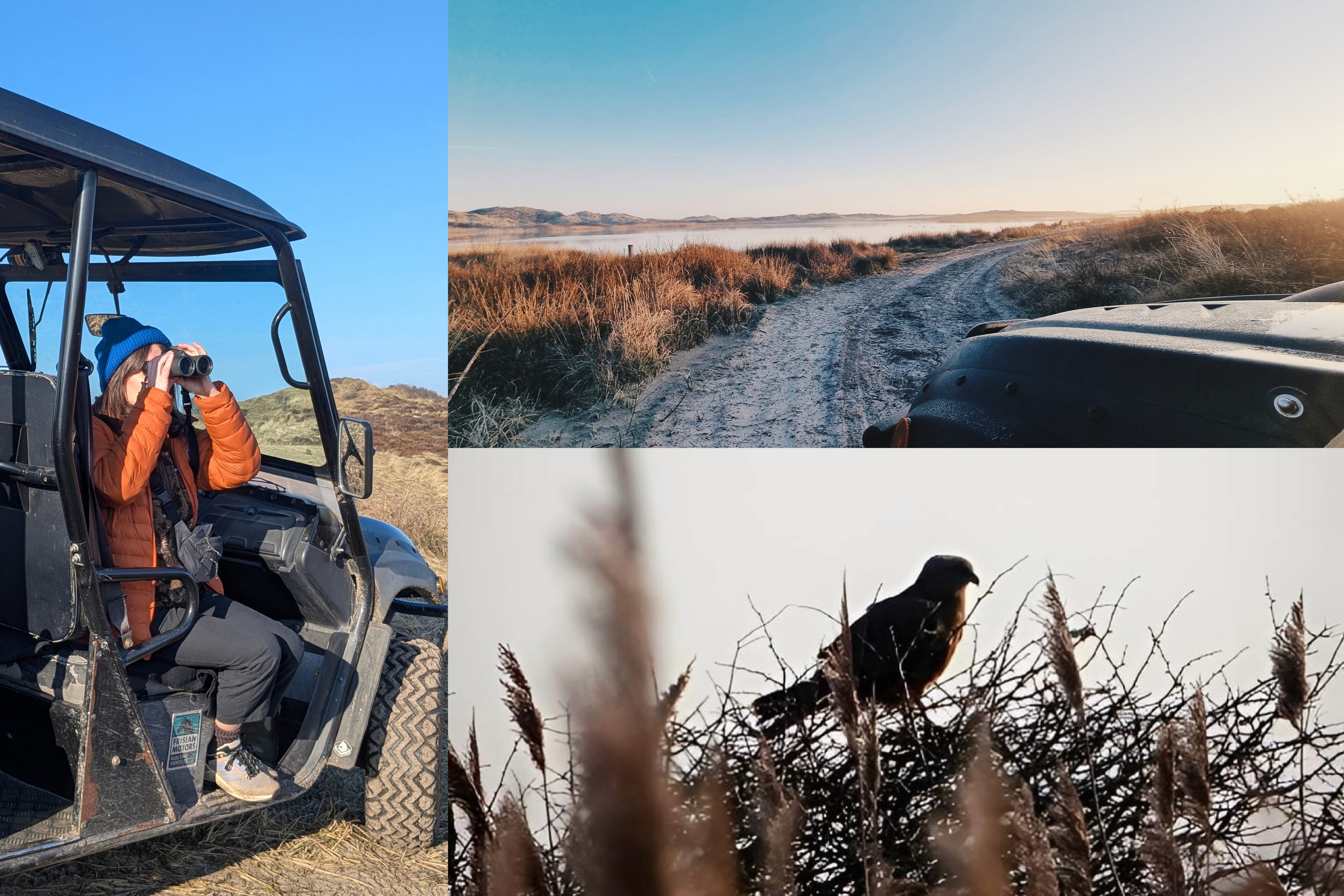
It’s early morning, and I’m seated in an electric off-road vehicle creeping almost silently along a sandy path. We’ve barely set off when we grind to a halt. Maarten, my guide and driver, hands me the binoculars and directs my attention to a tree in the distance. I spot her right away — a magnificent marsh harrier surveying the landscape. Maarten explains in a whisper, careful not to disturb her, that she has just made a 7,000km journey from Senegal to breed in the wetlands and reed beds of the Koegelwieck area.
During spring, the island’s protected dunes become a feeding and nesting ground for migratory birds, with activity picking up from mid-March as breeding species return. Heading out here with a guide is a smart move if you want the best chance of spotting them, as it’s forbidden to leave the roads and paths during breeding season (mid-March to July).
Details: Book a morning or afternoon tour with Eco Safari Terschelling. Group tours last around two and a half hours.
Salty delights
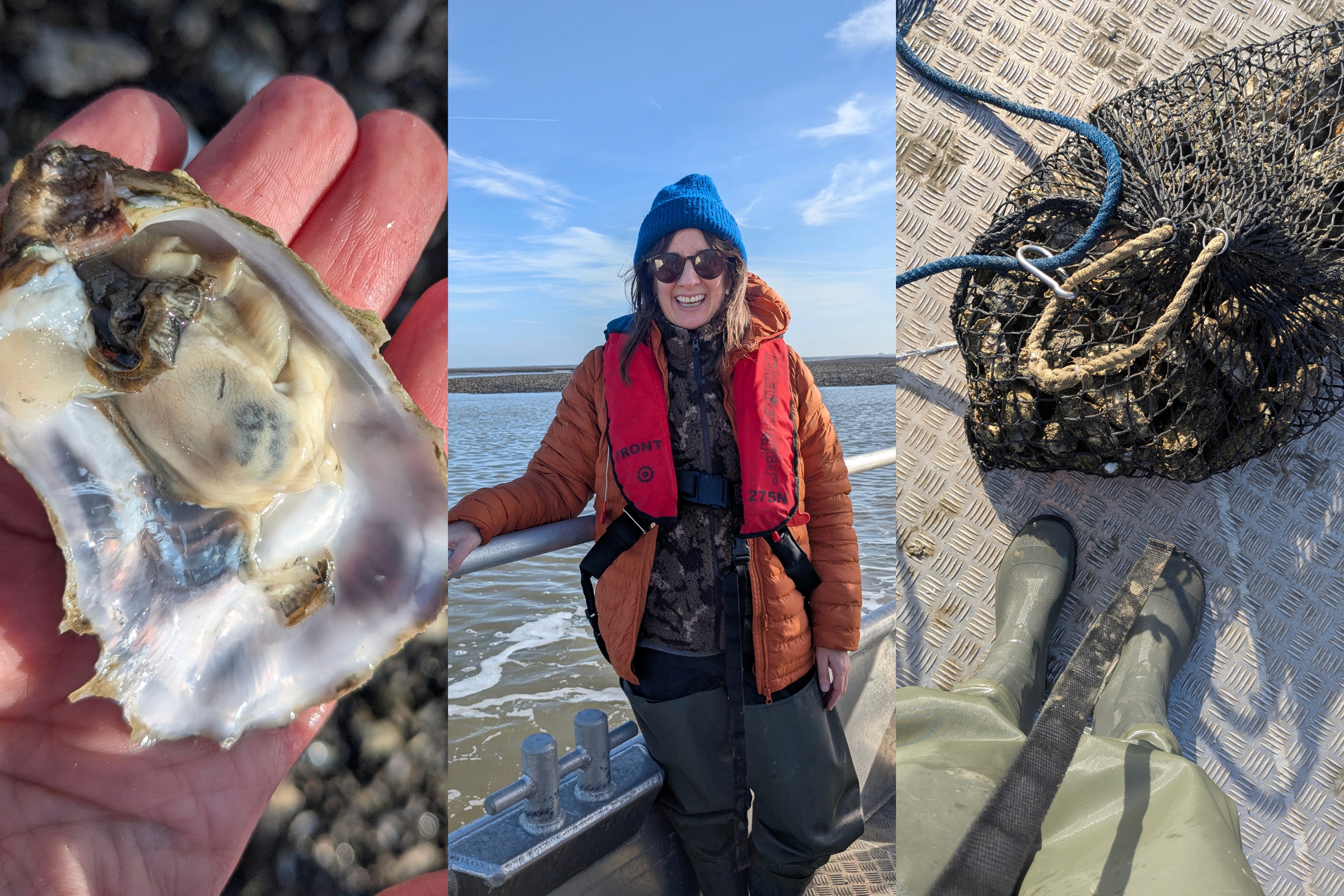
Werner greets me at his harbor-front restaurant, De Oester Fabriek, an elegant setting that suggests an afternoon of crisp white wine and oysters plattered on ice. But that's not on the agenda today! Twenty minutes later, I'm on a boat, thigh-high waders pulled over my trousers, sailing out across the Wadden Sea.
When the skipper drops anchor, we plod through the shallows to reach the oyster flats and receive a crash course in spotting the best of the bounty, harvesting them, and the art of cutting one open without sacrificing a finger.
Oysters successfully picked and prised apart, it’s time for the taste test. The verdict? Salty, subtle, and super fresh. To add to my delight, Werner’s coolbox conceals a bottle of prosecco, which we sip from plastic cups. Definitely my kind of tasting!
Details: Book your oyster excursion via De Oester Fabriek. The experience lasts approximately two hours, and departures depend on the tide and wind. You’ll also have the option to complete your outing with a tasting at the Oesterfabriek restaurant.
Turning trash to treasure
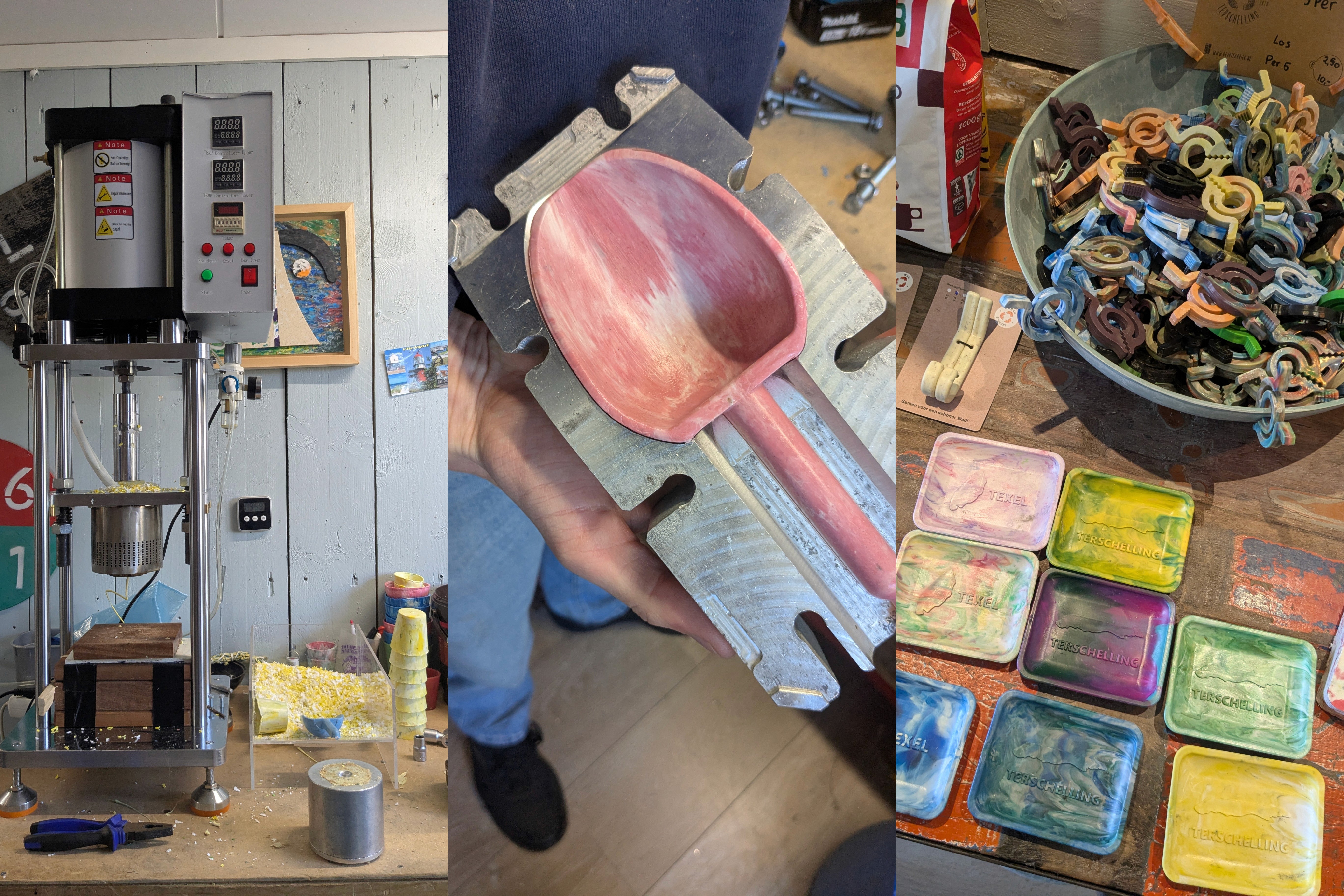
Terschelling's landscape is shaped by the tides, and while they bring much of the island’s beauty, they also bring something less welcome. A huge amount of plastic waste washes up on the beaches here every week, some of it from shipwrecks like the cargo ship MSC Zoë, which famously scattered thousands of little My Little Ponies across the shore.
My final stop is De Jut Fabriek, a store and workshop in the village of Lies, who have come up with a creative solution to combat the issue. I’m welcomed by Gus, and we get straight to work sorting and shredding plastic, feeding it into a press heated to 200 degrees, and squeezing the molten paste into a mould. A few minutes later, I squeal with delight as I take it apart to reveal a small spade. The on-site shop sells similar finished pieces, like cups, bowls, and soap dishes.
Details: Book a workshop at De Jut Fabriek. It lasts around 90 minutes, and you’ll get to make your own item from beach plastic.
Practical information
Getting there
By public transport
You can easily reach Terschelling from Amsterdam by taking a train to Harlingen Haven (about two and a half hours), and from there, catching a ferry to the island. Foot passengers can choose the fast ferry (no bikes or cars allowed), which takes around 50 minutes, or the regular ferry, which takes about two hours.
By car
Driving from Amsterdam to Harlingen takes roughly 90 minutes to two hours. If you plan to bring your car to Terschelling, you must take the regular ferry, as the fast ferry does not carry vehicles. Reservations for cars are required and should be made in advance.
Getting around
With over 70km of cycle paths, a bike is the best way to get around the island. You can pick up a rental at the harbor, just a couple hundred meters from where you step off the ferry. Most rental companies offer the option to deliver your luggage directly to your accommodation and collect it again when you leave.
Cover image: Bas van Breukelen/Unsplash

Claire Bissell
Senior Travel Editor